
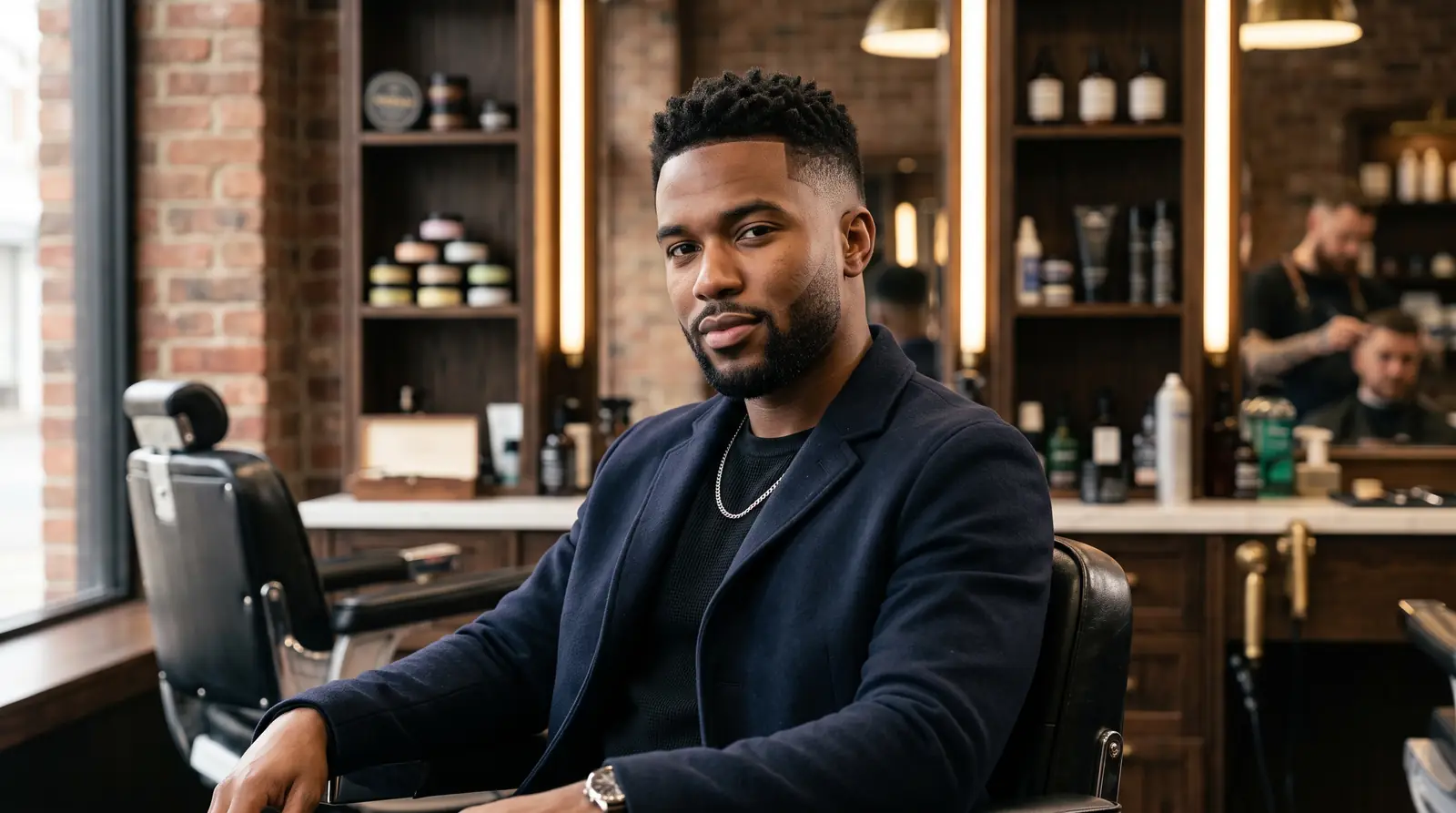
The shadow fade is the most versatile fade in the barbershop. While a skin fade takes the sides all the way down to bare scalp and a high fade starts above the temples, the shadow fade occupies the precise middle ground—a close, blended taper that leaves a subtle layer of dark shadow on the sides rather than stripping the hair to zero. The result is a refined, slightly softer look that reads polished without the high-maintenance demands of a full skin fade.
In 2026, the shadow fade has become a go-to for men who want a clean barbershop finish that transitions gracefully between visits, works across professional and casual environments, and complements virtually any top style. This guide breaks down exactly what the shadow fade is, how it compares to other fades, which variations suit different preferences, and how to walk into your barber knowing exactly what to ask for.
What Is a Shadow Fade?
A shadow fade is a men's haircut technique where the hair on the sides and back is tapered very close—typically using a 0.5 or 1 guard, sometimes a 0 guard without going skin-bare—creating a dark, shadow-like appearance at the lowest point of the fade. Unlike a skin fade, which reaches the bare scalp, the shadow fade stops just short of zero, leaving a faint but visible layer of stubble that casts a subtle dark "shadow" against the skin.
The defining visual characteristic is the gradient. The fade transitions from a slightly darker base at the hairline upward through progressively longer lengths, blending smoothly into the top style. Because the lowest point retains a touch of hair rather than bare skin, the overall effect is softer and more organic than the starkly precise skin fade.
Key Characteristics of a Shadow Fade
- Dark base: The lowest point of the fade retains a very short layer of hair—typically a 0.5 or 1 clipper guard—creating a dark shadow effect
- Smooth gradient: The transition from shortest to longest is gradual and seamless, with no harsh lines
- Softer edges: Unlike skin fades, the shadow fade edges blend rather than cut to a hard finish
- Versatile height: Can be positioned low, mid, or high depending on preference
- Lower maintenance demands: Grows out more gracefully than a skin fade, with longer intervals between barber visits
- Works with all top styles: Compatible with textured crops, quiffs, comb overs, box fades, and longer styles alike
Shadow Fade vs Other Fades
Understanding where the shadow fade sits in the fade spectrum helps clarify what you're asking for and whether it's the right choice for you.
| Feature | Shadow Fade | Skin Fade | Low Fade | Taper Fade |
|---|---|---|---|---|
| Lowest Point | 0.5–1 guard (very short stubble) | 0 (bare skin) | Varies, typically skin or near-skin | Longer than skin, blended taper |
| Visual Effect | Soft shadow, subtle contrast | Maximum contrast, sharp | Clean and close, modest contrast | Natural, graduated length |
| Maintenance Frequency | Every 3–4 weeks | Every 2 weeks | Every 2–3 weeks | Every 4–5 weeks |
| Grow-Out Appearance | Even, gradual | Visible patches as it grows | Moderate grow-out | Very natural grow-out |
| Best For | Most men, most settings | Maximum precision look | Subtle, professional | Classic, low-maintenance |
| Edge Definition | Medium-soft | Very sharp | Medium | Soft |
The shadow fade bridges the gap between the taper fade and the skin fade. It's closer and cleaner than a standard taper but doesn't demand the same frequency of maintenance as a full skin fade.
Types of Shadow Fade Variations
Low Shadow Fade
The fade starts just above the ear and blends upward from there. This is the most conservative and versatile variation—it suits professional environments, works with both short and longer top styles, and provides a clean finish without drawing significant attention to the sides. The low shadow fade is often the default choice for men trying a shadow fade for the first time.
Mid Shadow Fade
The fade begins roughly at the level of the temples, creating a stronger contrast between the sides and the top. This is the classic shadow fade position—visible and intentional without being extreme. It pairs well with medium-length top styles like a textured crop, quiff, or comb over. The mid shadow fade is the most photographed variation and the one most barbers will default to when asked for a shadow fade.
High Shadow Fade
Starting above the temples and climbing toward the crown, the high shadow fade creates the most dramatic contrast of the three positions. The sides appear very close and tight while the top style—whatever it may be—gets maximum visual real estate. This variation suits men who want a bold, defined look with clear separation between the sides and the top.
Shadow Fade with Textured Crop
One of the most popular combinations in 2026. A textured crop on top—short, choppy, finger-styled with matte product—sits atop a mid shadow fade. The softness of the shadow's edge complements the natural, textured finish of the crop. This pairing works particularly well for men with wavy or slightly thick hair.
Shadow Fade with Comb Over
The comb over's swept-to-one-side top style benefits from the shadow fade's clean sides, which frame and define the comb-over direction. A side part or hard part adds additional definition. The shadow fade's slightly softer edge blends naturally under the part, making it look intentional rather than rigid.
Shadow Fade with Box Top
Popular in Black barbershop culture, the box fade (or flat top fade) with a shadow fade base creates a defined, architectural look. The shadow at the sides provides a clean frame for the squared-off top without the sharp contrast of a skin base. This variation requires a skilled barber for precise top shaping.
Shadow Fade with Beard
When a beard is present, the shadow fade creates a natural visual bridge between the close-cropped sides and the beard line. The dark shadow at the base of the fade mirrors the beard's tone, so the transition from haircut to beard looks cohesive. A mid shadow fade typically works best with fuller beards, while a low shadow fade suits shorter stubble or a fade into the beard line.
Face Shapes and the Shadow Fade
The shadow fade's versatility means it suits a broader range of face shapes than more extreme cuts. Here's how to optimize the variation for your structure.
Oval Face
The most balanced face shape—works with every shadow fade variation and height. Any top style pairs well. This is the freest face shape to work with, so choose based on personal style preference rather than corrective geometry.
Round Face
A mid to high shadow fade creates height on the sides that visually elongates the face. Pair with a top style that adds vertical lift—a textured quiff, a French crop with some forward texture, or a comb over that sweeps up before going to the side. Avoid a low shadow fade that leaves significant volume on the sides, which can widen the face further.
Square Face
The defined jaw and strong facial structure pair naturally with the shadow fade's clean lines. A mid shadow fade with a textured or slightly longer top balances the angular jaw without softening it too much. Adding a side part can introduce asymmetry that breaks the block shape. Avoid very high fades that might over-emphasize the jaw by comparison.
Oblong or Long Face
Choose a low shadow fade to preserve more width on the sides, and avoid top styles that add significant vertical height. A textured side sweep, a loose comb over, or a flat crop keeps proportions balanced. The shadow fade's softer edge works in your favor here—it avoids the visual elongation that a high skin fade might create.
Diamond Face
Wide at the cheekbones with a narrower forehead and jaw. A mid shadow fade with a slightly wider top style—textured crop with some volume or a quiff that broadens at the sides—can balance the cheekbone width. Avoid very high fades that draw the eye to the narrow jaw and forehead.
Triangle or Pear Face
Wider at the jaw than the forehead. A high shadow fade reduces the visual width at the lower sides, while a top style with some added volume at the crown creates proportion. This face shape benefits most from the shadow fade because the close taper at the sides minimizes the jaw-widening effect.
Best Hair Types for a Shadow Fade
The shadow fade's soft gradient and moderate depth work across virtually all hair types.
Straight Hair: Excellent choice. The fade blends cleanly and the grow-out is even. Straight hair shows the gradient clearly, and the subtle shadow at the base reads as intentional definition. Any top style from a slick back to a textured crop works well.
Wavy Hair: The shadow fade complements wavy texture, particularly for mid-length top styles. The natural movement on top contrasts well with the close, even fade on the sides. Products like sea salt spray or a light pomade enhance the wave while the fade keeps the overall look controlled.
Curly Hair: Works well, though the fade technique is slightly more nuanced—the barber needs to work with the curl pattern to create a smooth transition rather than a patchy one. A mid shadow fade paired with defined, product-treated curls on top is a strong combination.
Coily or Tight-Curl Hair: The shadow fade is commonly used in the context of box fades, tapered naturals, and low-cut styles in Black barbershop culture. The dark shadow at the base blends naturally with the hair density and creates a clean, rich finish.
Thick Hair: Thick hair can create a more defined shadow at the base, which amplifies the style's visual effect. The sides may need more clipper passes for even blending, but the result tends to be striking.
Fine Hair: The shadow fade can help fine hair look denser. By leaving a thin layer of stubble at the base, the shadow effect creates an impression of hair density. The blended transition also hides the thinning that can be visible with a skin fade on fine hair.
How to Style the Top with a Shadow Fade
The shadow fade's neutral, versatile sides make it a foundation for almost any top style. Here are the most effective pairings.
Textured Crop
Apply a matte clay or fiber paste to dry or slightly damp hair. Work it through with fingers, pushing forward and slightly down. Pinch and separate sections for texture. The crop's natural, minimal styling contrasts cleanly with the shadow fade's precision.
Quiff
Start with a volumizing product on damp hair, then blow-dry upward and slightly backward. Apply a medium-hold pomade or wax, pushing the front section up and back. The quiff adds height that balances the close sides.
Comb Over
Create a side part with a comb while hair is damp. Apply a light to medium-hold product—a water-based pomade or cream works well—then comb the hair to one side. The shadow fade frames the part cleanly.
Natural/Defined Curls
Apply a curl cream or defining gel to damp curls. Scrunch upward and allow to air-dry or use a diffuser. Keep product light to avoid crunch. The shadow fade base provides contrast that lets the curl pattern read as the focal point.
Slick Back
Comb all hair straight back with a medium or strong-hold pomade. The shadow fade on the sides creates a clean frame for the swept-back top.
Maintenance Schedule for a Shadow Fade
One of the shadow fade's main advantages over a skin fade is its forgiving grow-out. Because the lowest point is not bare skin, the transition remains relatively clean as the hair grows.
Weeks 1–2: The fade looks freshest. Blending is tight and the shadow is at its most defined.
Weeks 3–4: The fade has softened slightly but still reads as intentional and clean. Most men with a shadow fade are comfortable at this stage and may delay their barber visit.
Weeks 4–5: Depending on how fast your hair grows, the fade may have spread upward slightly. A touch-up visit—or a full new cut—is recommended in this window.
Vs. Skin Fade: A skin fade typically needs a touch-up every 2 weeks. The shadow fade extends that to 3–4 weeks for most men, reducing barber frequency by roughly half without sacrificing the maintained appearance.
How to Ask Your Barber for a Shadow Fade
Walking in with clear language prevents miscommunication. Here's how to describe what you want:
The essentials to specify:
- "Shadow fade" — establishes the base technique (very short but not bare skin at the sides)
- Height: low (just above the ear), mid (at the temple), or high (above the temple toward crown)
- Top style: specify what you want on top, or bring a reference photo
- Part: if you want a side part or hard part, mention it explicitly
- Neckline: squared, rounded, or blended (faded into the neck)
Example request: "I'd like a shadow fade—mid height, keep the sides very close but not skin bare, blend it smooth. On top I want a textured crop, about 2 to 2.5 inches. Clean neckline, squared off."
Reference photos: Shadow fades vary in interpretation between barbers, particularly in terms of exactly how short the base goes. A photo of the precise variation you want removes ambiguity and aligns expectations before the first clipper pass.
Trust your barber's input: If you have an unusual hair texture or a specific face shape, ask your barber which shadow fade height and top style combination they'd recommend. A skilled barber will know how to adapt the technique to your specific features.
Shadow Fade Common Mistakes to Avoid
Confusing it with a skin fade: The defining feature of the shadow fade is that it does not go to bare skin. If you ask for a shadow fade and get a skin fade, the barber has gone too far. Clarify this before the cut begins.
Going too high on the first try: A high shadow fade is striking but harder to pull off without the right face shape and top style. If you're new to the style, start mid or low and work up from there.
Neglecting the neckline: The neckline is the last place the fade terminates. A poorly defined or uneven neckline undermines the entire cut. Confirm your neckline preference—squared, rounded, or tapered—before your barber finishes.
Using the wrong products: The shadow fade's clean lines are best maintained with lightweight or medium-hold products. Heavy waxes and oils can make the sides look greasy or cause the gradient to appear patchy in different lighting.
Waiting too long between visits: Even though the shadow fade grows out more gracefully than a skin fade, allowing it to grow for more than 5 to 6 weeks will result in a visibly uneven gradient that's lost its intentional shape.
Frequently Asked Questions
What is the difference between a shadow fade and a low fade?
A low fade refers to the position of the fade—it starts low on the head, just above the ear. A shadow fade refers to the depth—it stays close but doesn't reach bare skin. A shadow fade can be positioned at any height. You can have a low shadow fade, mid shadow fade, or high shadow fade.
How short is a shadow fade?
The shortest point of a shadow fade is typically cut with a 0.5 or 1 clipper guard, leaving just enough stubble to create the dark "shadow" effect without revealing bare scalp. Some barbers use a 0 guard briefly as a transition point before building upward.
Is the shadow fade good for beginners at the barber?
Yes. The shadow fade is one of the easiest styles to communicate and one of the most forgiving to receive for the first time. Because it doesn't require going to bare skin, errors in blending are less obvious. It's a lower-stakes introduction to the fade family.
Does the shadow fade work with all hair textures?
Yes—shadow fades are performed on all hair textures, from straight to coily. The technique adjusts based on texture. Barbers experienced with natural hair will approach the fade differently than those working primarily with straight hair, so seek out someone with experience in your hair type.
How often do I need to get a shadow fade touched up?
Most men with a shadow fade return to the barber every 3 to 4 weeks. This is roughly twice as long as the 2-week interval typical for skin fades, making the shadow fade a more practical choice for men with busy schedules or tighter grooming budgets.
Can I get a shadow fade on a short haircut?
Yes. Shadow fades work on very short tops as well as longer ones. A shadow fade with a number 3 or 4 top, for example, creates a subtle, low-contrast gradient that looks clean and intentional without being dramatic.
What's the difference between a shadow fade and a blurry fade?
The terms are sometimes used interchangeably, but there is a distinction in some barbershops. A "blurry fade" typically refers to a fade where the transition is deliberately softened to the point of appearing almost seamless—no visible lines at all. A shadow fade specifically references the short-but-not-zero base that creates the dark shadow effect. In practice, both prioritize soft blending over sharp contrast.
The shadow fade has earned its place as one of the most consistently requested fade styles for a simple reason: it delivers a clean, defined barbershop finish without demanding the same frequency of upkeep as a skin fade. It's precise without being harsh, close without being extreme, and versatile enough to work as the foundation for virtually any top style. If you've been on the fence about fades—unsure whether you want the full-commitment skin fade or the softer taper—the shadow fade is the natural starting point. Get it done right once, and it will likely become your default.