

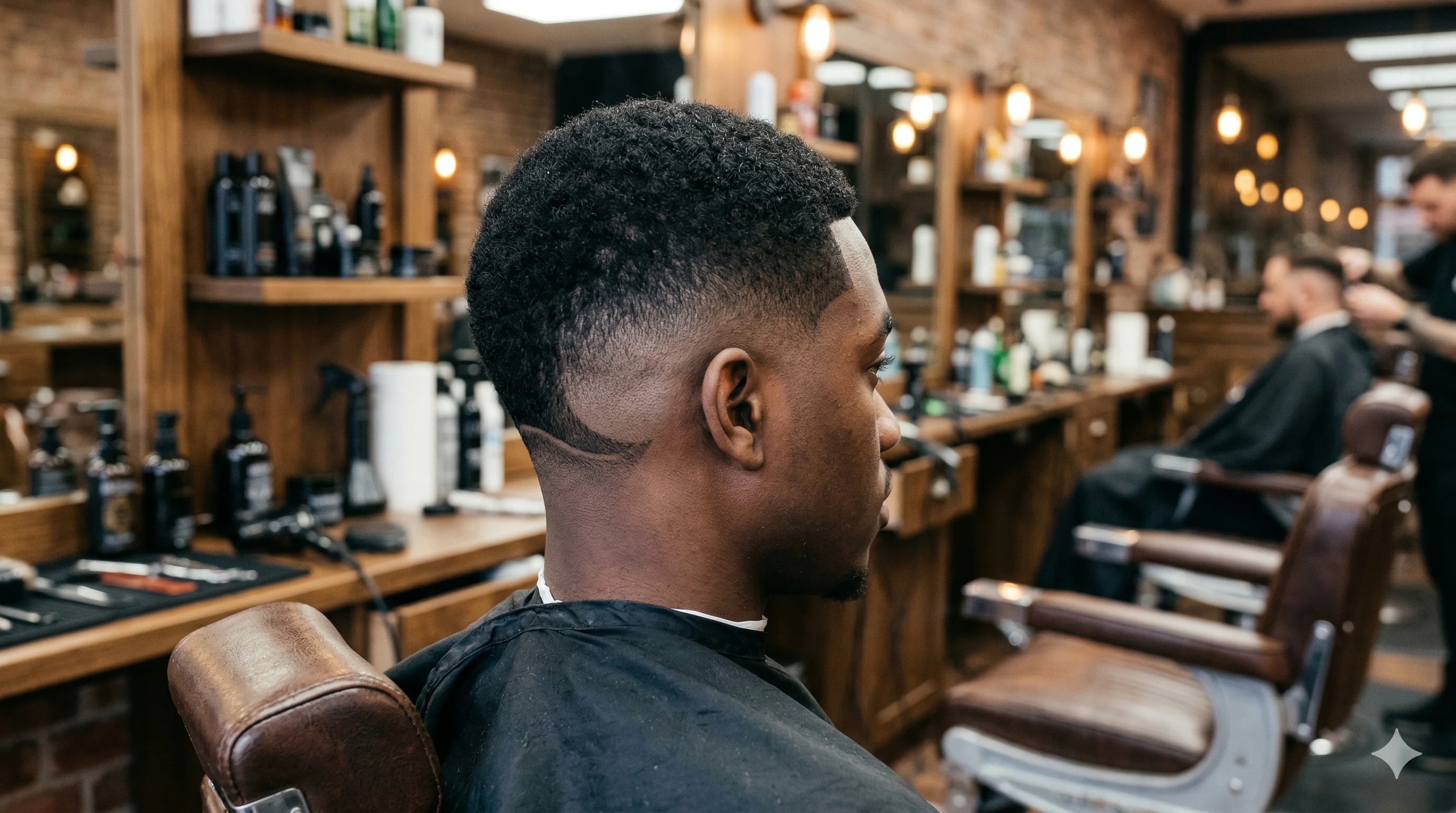
The drop fade haircut has emerged as one of the most sophisticated and versatile fade variations, distinguished by its unique curved line that drops behind the ears. Unlike traditional straight-across fades, the drop fade follows the natural contours of your head, creating a dimensional look that enhances face shape and adds visual interest from every angle. In 2026, this stylish fade continues to grow in popularity among men who appreciate both technical precision and creative styling.
Whether you're exploring fade options for the first time or looking to switch up your current style, this comprehensive guide will help you understand everything about the drop fade—from its defining characteristics to maintenance requirements and styling techniques.
What Is a Drop Fade Haircut?
A drop fade is a men's haircut where the fade line curves downward behind the ears, "dropping" lower at the back of the head rather than maintaining a straight horizontal line. This curved transition creates a natural arc that follows the shape of your skull, providing more coverage around the crown while keeping the sides clean and tapered.
The drop fade is not actually a complete haircut on its own, but rather a technique that can be incorporated into various styles to achieve a more dimensional, contoured look. The term "drop fade" specifically refers to the curved fade line on the sides and back of the head—it's the downward arc that distinguishes it from standard low, mid, or high fades.
Key Characteristics of a Drop Fade
- Curved fade line: Drops behind the ears instead of straight across
- Natural contour: Follows the shape of your head for dimensional look
- Versatile placement: Can be low, mid, or high drop fade
- Enhanced dimension: Creates visual interest from side and back angles
- Face framing: Outlines the face from the front view
- More crown coverage: Leaves additional length around the top back of head
Drop Fade vs Regular Fade: Understanding the Difference
The primary distinction between a drop fade and a regular fade lies in the fade line's path around your head.
| Feature | Drop Fade | Regular Fade (Low/Mid/High) |
|---|---|---|
| Fade Line Path | Curves downward behind ears | Straight horizontal line around head |
| Back Coverage | More hair at crown/back | Even coverage all around |
| Visual Effect | Dimensional, contoured look | Clean, uniform appearance |
| Head Shape Enhancement | Follows natural skull contours | Creates consistent perimeter |
| Best For | Adding dimension, creative styles | Classic, uniform look |
| Styling Versatility | Works well with mohawks, textured tops | Universal compatibility |
According to barber experts, the drop fade is often chosen for its unique shape that adds a creative twist to hairstyles, while regular fades provide a cleaner, more classic look that's versatile and universally flattering.
The drop fade's curved line makes it particularly effective for:
- Creating the illusion of a more rounded head shape
- Adding visual interest to side and back profiles
- Complementing mohawks and faux hawks
- Enhancing natural curl patterns with more back coverage
Types of Drop Fade Haircuts
The drop fade serves as a versatile foundation that can be customized to different heights and combined with various top styles. Here are the most popular variations trending in 2026:
Low Drop Fade
The low drop fade starts just above the ear and curves downward to drop behind the ear and lower at the neckline. This is the most subtle drop fade variation, offering a clean, professional appearance with the added dimension of the curved line.
Best for:
- Professional environments requiring conservative styles
- First-time drop fade wearers
- Men who prefer subtle contrast
- Maintaining more hair coverage on sides
Mid Drop Fade
The mid drop fade begins around temple level and curves behind the ear, creating a balanced look between boldness and subtlety. This is the most popular drop fade variation, offering versatility that works with nearly any top style.
Best for:
- Universal appeal across settings
- Balanced contrast and coverage
- Most face shapes and hair types
- Everyday versatility
High Drop Fade
The high drop fade starts near the top of the temples and curves dramatically downward behind the ears. This creates maximum contrast and the most pronounced curved effect, making a bold statement.
Best for:
- Men wanting dramatic impact
- Thick hair on top requiring side reduction
- Urban, fashion-forward aesthetics
- Creative and artistic expressions
Drop Skin Fade
The drop skin fade takes the gradient all the way down to bare skin at its lowest point, creating maximum contrast. This can be combined with low, mid, or high placement for different effects.
Best for:
- Maximum clean, sharp appearance
- Men with thick hair who want dramatic contrast
- Those willing to maintain frequent touch-ups
- Bold, contemporary style preferences
Drop Taper Fade
The drop taper fade maintains some hair length throughout the fade, never fully reaching skin. The curved line still drops behind the ears, but the transition is softer and more gradual.
Best for:
- More conservative professional settings
- Easier maintenance between cuts
- Men preferring softer contrast
- Natural, less dramatic looks
Drop Fade with Pompadour
This combination pairs the drop fade's curved lines with classic pompadour volume on top. The dimensional fade complements the swept-back height, creating a sophisticated, attention-grabbing style.
Best for:
- Special occasions and formal events
- Men with thick, manageable hair
- Vintage-meets-modern aesthetic
- Making bold style statements
Drop Fade with Mohawk
One of the most popular drop fade combinations, the mohawk benefits significantly from the curved fade line. The drop perfectly frames the mohawk strip running down the center, creating natural dimension and emphasis.
Best for:
- Creative, edgy personal style
- Men wanting to stand out
- Thick hair that can support mohawk structure
- Urban and artistic aesthetics
Drop Fade with Afro
The drop fade afro celebrates natural texture while providing sharp definition on the sides. The curved fade follows the afro's natural round shape, creating a harmonious, balanced silhouette.
Best for:
- Natural, coily hair textures
- Showcasing volume and texture on top
- Bold, confident style statements
- Cultural expression and pride
Drop Fade with Curls
The drop fade pairs exceptionally well with curly hair on top. The curved fade provides structure while allowing curls to maintain natural volume and movement.
Best for:
- Natural curl patterns
- Adding definition to curly styles
- Men wanting to embrace natural texture
- Low-maintenance curly styling
Drop Fade with Braids
Combining braids with a drop fade creates striking contrast between intricate top styling and clean, curved sides. This style offers both protective benefits and visual impact.
Best for:
- Natural hair textures
- Protective styling
- Cultural and creative expression
- Long-lasting style with minimal daily maintenance
Best Drop Fade Styles for 2026
| Style | Description | Hair Length on Top | Maintenance Frequency |
|---|---|---|---|
| Low Drop Fade | Subtle curve, professional | Any length | Every 3-4 weeks |
| Mid Drop Fade | Balanced curve, versatile | Any length | Every 2-3 weeks |
| High Drop Fade | Dramatic curve, bold | 2+ inches recommended | Every 1-2 weeks |
| Drop Skin Fade | Curved to bare skin | Any length | Every 1-2 weeks |
| Drop Fade Mohawk | Curved sides, central strip | 3-5 inches on strip | Every 2-3 weeks |
| Drop Fade Pompadour | Curved sides, volume on top | 4-6 inches | Every 2-3 weeks |
| Drop Fade Afro | Curved sides, natural texture | 2-4 inches | Every 2-3 weeks |
| Drop Fade with Curls | Curved sides, curly top | 2-4 inches | Every 2-3 weeks |
How to Ask Your Barber for a Drop Fade
Clear communication ensures you get exactly the drop fade you want. Here's your step-by-step guide:
Step 1: Specify the Drop Fade and Height
Start with the foundation: "I'd like a drop fade" followed by the height specification:
- "I want a low drop fade that starts just above my ear"
- "I'd like a mid drop fade starting around temple level"
- "Give me a high drop fade for maximum contrast"
Step 2: Clarify the Fade Finish
Be specific about how short the fade should go:
- "Take it down to skin at the bottom" (skin fade)
- "Keep a #0.5 guard length at the shortest point" (taper)
- "I want it bald at the neck" (bald fade)
Step 3: Describe the Top Style
Explain what you want on top:
- "Leave about 3-4 inches on top with some texture"
- "Keep the top natural with my curl pattern"
- "I want a mohawk strip about 2 inches wide"
- "Give me a pompadour with 5-6 inches in front"
Step 4: Mention Special Details
Don't forget these important elements:
- Beard connection: "Can you blend the fade into my beard?"
- Line-up/edge-up: "I'd like a sharp hairline edge-up"
- Neckline: "Please keep the neckline tapered, not blocked"
- Part line: "Can you add a hard part on the left side?"
- Texture: "I'd like some texture cut into the top"
Step 5: Bring Reference Photos
Show your barber 2-3 photos from different angles—especially side profile shots that clearly show the curved drop line. Photos from the back are particularly valuable for drop fades since the curve is most visible from behind.
"The drop fade's curve can vary significantly in how dramatic it is and exactly where it drops. Photos eliminate any confusion about the specific arc you're envisioning."
Choosing the Best Drop Fade for Your Face Shape
The drop fade's curved line interacts differently with various face shapes. Here's how to optimize your choice:
Round Face
Drop fades work excellently for round faces. The curved line creates vertical emphasis that visually elongates, while the arc adds dimension that prevents a boxy appearance. Pair with volume on top for maximum lengthening effect.
Recommended: Mid or high drop fade with textured top or pompadour
Oval Face
You have the most versatile face shape—nearly any drop fade variation works beautifully. Feel free to experiment with different heights and top styles from buzz cuts to long, flowing styles.
Recommended: Any drop fade variation based on personal preference
Square Face
Drop fades complement square faces well by adding verticality and softness through the curve. The dimensional line balances angular features while maintaining masculine structure.
Recommended: Mid drop fade with textured or natural top styles
Heart-Shaped Face
A drop fade with medium-length, textured top works well for heart-shaped faces. The reduced bulk on the sides prevents top-heaviness, while the curve adds dimension.
Recommended: Low to mid drop fade with textured crop or forward fringe
Oblong/Rectangular Face
Approach with caution. The drop fade's curve can elongate the face further. If you love the drop fade look, keep significant width on top to add proportion, or consider a low drop fade for minimal elongation.
Recommended: Low drop fade with wide, textured styles on top
Diamond Face
Drop fades work well for diamond faces, especially with styles that add width at the temples. The curve creates balance while highlighting your cheekbones.
Recommended: Mid drop fade with quiff or textured forward styling
Drop Fade Maintenance and Care
The drop fade requires regular maintenance to keep its curved lines sharp and intentional. Here's your complete care guide:
Touch-Up Schedule
- Every 2-3 weeks: Standard maintenance for most drop fades
- Every 1-2 weeks: Required for drop skin fades to stay sharp
- Every 3-4 weeks: Possible with low drop taper fades
- Quick line-ups: Many barbers offer edge-up services between full cuts
The drop fade's curved line shows regrowth differently than straight fades—the arc can lose definition quickly, making regular maintenance essential for keeping the style intentional rather than overgrown.
Between Haircuts
Extend time between cuts with these strategies:
- Maintain the neckline: Use home clippers to keep the neckline clean
- Use quality styling products: Matte clays and pomades help maintain top style
- Edge-up at home: Carefully maintain your hairline between visits
- Consider quick touch-ups: Ask about fade-only maintenance at reduced prices
Styling Products for Drop Fades
| Product Type | Best For | Hold Level | Finish |
|---|---|---|---|
| Matte Clay | Textured styles, thick hair | Strong | Matte |
| Pomade | Pompadours, slick styles | Medium-Strong | Shine |
| Styling Cream | Natural looks, daily use | Light-Medium | Natural |
| Sea Salt Spray | Wavy texture, volume | Light | Matte |
| Hair Mousse | Curly hair, volume | Medium | Natural |
| Texture Paste | Definition, separation | Medium-Strong | Matte |
| Edge Control | Line-ups, baby hairs | Strong | Shine/Matte |
Complete Styling Routine
For Textured/Straight Hair:
- Prep: Apply pre-styler (sea salt spray or mousse) to damp hair
- Blow-dry: Dry in desired direction, using fingers or brush to guide
- Product: Apply matte clay, pomade, or cream to set the style
- Finish: Adjust and perfect with fingers or comb
For Curly/Coily Hair:
- Moisture: Apply leave-in conditioner to damp hair
- Define: Use curl cream or gel to define natural pattern
- Dry: Air dry or diffuse on low heat
- Shape: Use pick or fingers to shape desired volume
- Set: Light hairspray or oil to set and add shine
Scalp Care for Drop Skin Fades
If your drop fade goes to skin, take care of exposed areas:
- Moisturize daily: Prevent dryness on faded areas with lightweight lotion
- Apply sunscreen: Protect exposed scalp from UV damage (SPF 30+)
- Use aftershave balm: Prevent irritation immediately after fresh fades
- Exfoliate gently: Weekly exfoliation helps prevent ingrown hairs
- Stay hydrated: Drink water to maintain healthy scalp from within
Common Drop Fade Mistakes to Avoid
- Not specifying the curve: Simply saying "fade" won't communicate the drop—be explicit
- Forgetting to show the back: The curve is most visible from behind; show back photos
- Going too long between cuts: The curved line loses definition quickly
- Not considering head shape: The drop should enhance your natural head contours
- Skipping the beard blend: If you have facial hair, discuss the connection
- Using heavy products on sides: Faded areas look greasy with too much product
- Not protecting from sun: Exposed scalp needs SPF protection
- Attempting DIY maintenance: The curved line requires professional skill
Drop Fade for Different Hair Types
Thick Hair
Drop fades are ideal for thick hair. The curved side reduction prevents bulk while the drop adds dimension. The extra length around the crown accommodates thick hair naturally.
Tip: Request texture cutting on top to reduce weight and add movement
Thin/Fine Hair
Drop fades can work for thin hair, but the dramatic contrast may emphasize thinness. Consider a drop taper fade with slightly more length to create the illusion of thickness.
Tip: Use volumizing products and blow-dry to create fuller appearance
Curly Hair
Drop fades look fantastic with curly hair, creating dimension that complements natural curl patterns. The curved line follows the natural round shape of curly styles.
Tip: Find a barber experienced with curly hair and curl patterns
Coily/Afro-Textured Hair
The drop fade is one of the most popular choices for afro-textured hair. The curve naturally complements the round shape of afros and natural styles, creating harmonious proportions.
Tip: Keep hair moisturized and use proper curl-defining products
Wavy Hair
Wavy hair pairs excellently with drop fades. The natural movement on top contrasts beautifully with the precision of the curved fade, creating textured dimension.
Tip: Enhance waves with sea salt spray and air drying or diffusing
Straight Hair
Straight hair showcases the drop fade's clean lines exceptionally well. The contrast between smooth top and precise curve is striking.
Tip: Use matte products to add texture and prevent flat appearance
Drop Fade Variations by Ethnicity
The drop fade works across all ethnicities, but styling approaches may vary:
Drop Fade for Black Men
The drop fade is exceptionally popular in Black barbering culture, often combined with natural textures, waves, curls, or protective styles. The curve complements round afro shapes and provides sharp definition.
Popular combinations: Drop fade with afro, waves, 360 waves, braids, twists
Drop Fade for White Men
White men often combine drop fades with textured crops, pompadours, or quiffs. The curve adds dimension to typically flatter hair textures.
Popular combinations: Drop fade with textured crop, pompadour, side part
Drop Fade for Asian Men
Asian men benefit from the drop fade's dimension, especially when combined with textured or flowing top styles. The curve works well with thick, straight Asian hair.
Popular combinations: Drop fade with textured crop, flow style, forward fringe
Drop Fade for Latino Men
Latino men often pair drop fades with slick backs, pompadours, or natural curly textures. The versatile curve works across the spectrum of Latino hair types.
Popular combinations: Drop fade with slick back, pompadour, natural curls
Frequently Asked Questions
How long does a drop fade last?
A drop fade maintains its sharp appearance for about 2-3 weeks on average—similar to other fade types. Drop skin fades require more frequent maintenance (every 1-2 weeks) to keep the contrast crisp. Low drop taper fades can last 3-4 weeks before needing a touch-up.
What's the difference between a drop fade and a temp fade?
A drop fade features a curved line that drops behind the ears and around the back of the head. A temp fade (temple fade) focuses specifically on the temple area at the front, fading the temples while often leaving more coverage on the sides and back. They serve different aesthetic purposes.
Can I get a drop fade with short hair on top?
Absolutely! Drop fades work with any hair length on top, from buzz cuts to long flowing styles. The fade is about the curved sides and back, not the top length. Short styles like crew cuts and textured crops pair excellently with drop fades.
Is a drop fade good for professional settings?
It depends on your workplace and the specific drop fade variation. A low drop taper fade is conservative enough for most professional environments. High drop skin fades make bolder statements that may be better suited for creative industries or less formal workplaces.
How much does a drop fade cost?
Expect to pay $30-60 for a quality drop fade at most barbershops. The curved technique requires precision and skill, which may cost slightly more than simple cuts. High-end barbers in metropolitan areas may charge $60-100 or more.
Can I do a drop fade at home?
The drop fade is one of the most technically challenging fade variations and is not recommended for DIY attempts. The curved line requires experience, proper technique, and the right tools. Visit a skilled barber for best results.
What's better: drop fade or regular fade?
Neither is objectively better—they serve different style goals. Drop fades add dimension and creative flair through the curved line, ideal for men wanting unique, contoured looks. Regular fades offer clean, classic, uniform appearance that's universally versatile. Choose based on your aesthetic preferences.
How do I maintain the curved line between cuts?
The curved fade line is difficult to maintain at home. Focus on keeping the neckline clean with home clippers and maintaining your hairline edge-up. For the fade itself, schedule regular barber visits every 2-3 weeks to keep the curve crisp and intentional.
Preview Your Drop Fade with BaldFade AI
Curious how a drop fade would look on you? Use BaldFade's AI preview tool to visualize different drop fade styles before your barber appointment. Upload your photo, select your desired drop fade variation, and see your transformation from multiple angles. Ready to try it? Jump straight to the drop fade preview tool to preview a smooth drop fade on your own photo.
Our AI-powered preview helps you:
- Compare drop fade with regular low, mid, and high fades
- Test different curved fade heights on your face
- Visualize various top style combinations
- Build confidence before committing
- Show your barber exactly what you want
Conclusion
The drop fade haircut stands out as one of the most dimensional and creative fade variations, distinguished by its unique curved line that follows the natural contours of your head. Its downward arc behind the ears creates visual interest from every angle, making it an excellent choice for men who appreciate both technical precision and stylistic flair.
Success with a drop fade comes down to understanding the curved fade line, choosing the right height (low, mid, or high) for your face shape and style preferences, communicating clearly with your barber using specific terminology and reference photos, and maintaining regular touch-ups every 2-3 weeks to keep the curve sharp.
The 2026 trend toward personalized, dimensional cuts means the drop fade's contoured approach is more popular than ever. Whether you're pairing it with a pompadour, mohawk, natural afro, or textured crop, the drop fade offers versatility that enhances rather than overpowers your chosen top style.
The curve makes all the difference—it transforms a standard fade into a dimensional statement that celebrates your head's natural shape while adding creative flair. If you're ready to move beyond straight-across fades and embrace a more contoured, interesting look, the drop fade delivers exactly that.
Ready to see how a drop fade would transform your look? Try our AI preview tool and discover your perfect curved fade style today.