

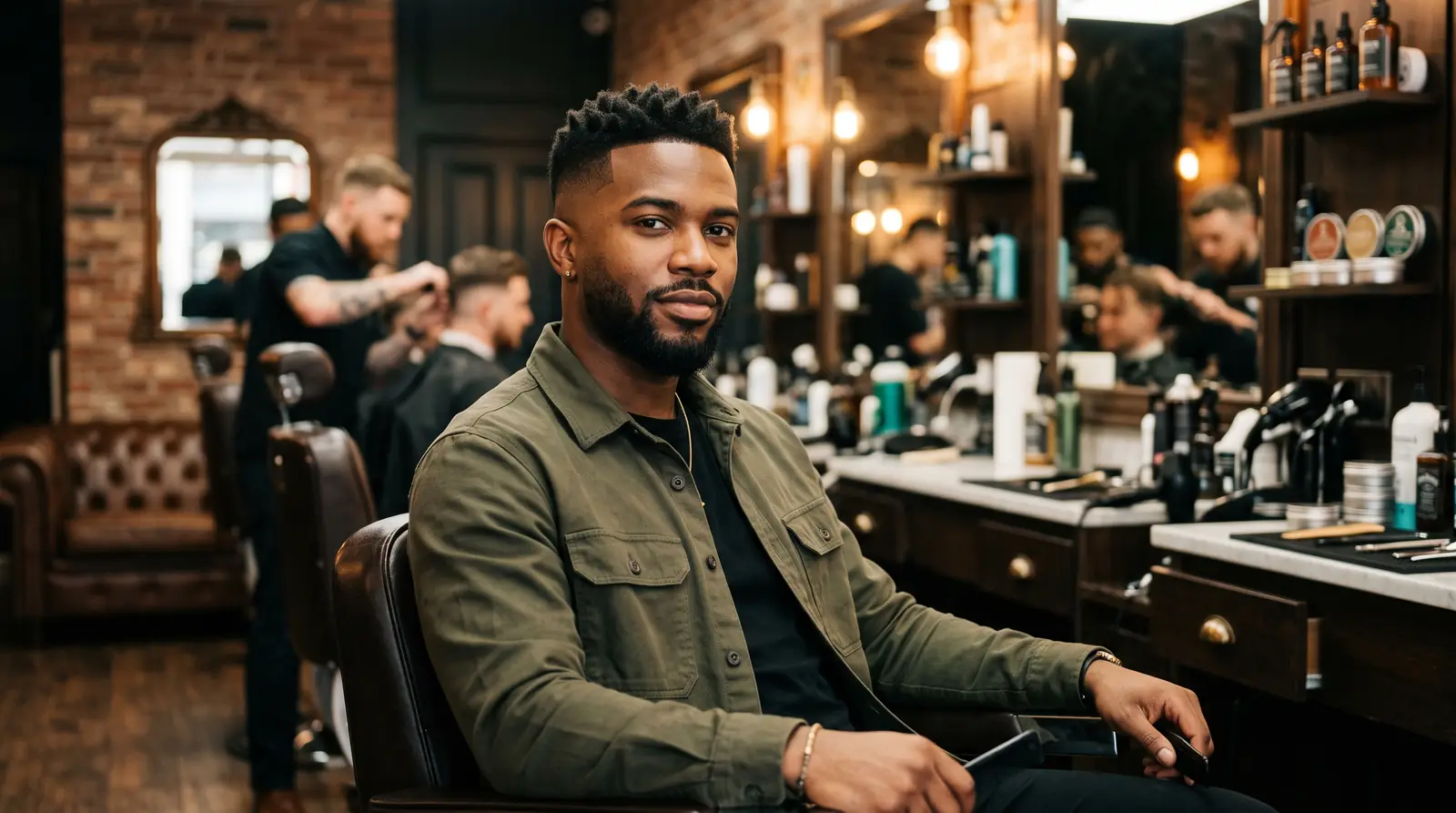
The low fade haircut remains one of the most requested styles in barbershops worldwide, and 2026 is no exception. Known for its subtle elegance and professional appeal, the low fade starts just above the ear and gradually tapers down to the skin, creating a clean, refined look that works in any setting. Whether you're stepping into a corporate boardroom or hitting the town on a Friday night, this comprehensive guide will help you master the low fade.
What Is a Low Fade Haircut?
A low fade haircut is a classic men's style where the hair gradually shortens starting from just above the ear—typically about an inch above the earlobe—and tapers down to shorter lengths or skin at the neckline. Unlike higher fade variations, the low fade keeps more hair on the sides, creating a subtle transition that looks natural and sophisticated.
The key appeal of the low fade lies in its versatility. It's conservative enough for professional environments yet stylish enough to pair with trendy top styles. This balance has made it a staple in men's grooming for decades, and it continues to evolve with modern variations.
Key Characteristics of a Low Fade
- Starting point: Begins approximately 1 inch above the ear
- Gradual transition: Smooth, subtle blend from longer to shorter
- Conservative appearance: More hair coverage than mid or high fades
- Professional-friendly: Accepted in most workplace environments
- Grows out gracefully: Maintains shape longer between cuts
Low Fade vs Mid Fade vs High Fade
Understanding where the low fade sits in the fade family helps you communicate effectively with your barber and choose the right style for your needs.
| Feature | Low Fade | Mid Fade | High Fade |
|---|---|---|---|
| Starting Point | Just above the ear (~1 inch) | Temple level | Near the crown/temples |
| Contrast Level | Subtle | Moderate | Bold |
| Hair Coverage | Maximum | Moderate | Minimal |
| Maintenance | Every 3-4 weeks | Every 2-3 weeks | Every 1-2 weeks |
| Best For | Professional settings, subtle style | Universal appeal | Maximum impact |
| Face Elongation | Minimal | Moderate | Maximum |
| First-Timer Friendly | Highly recommended | Yes | Somewhat |
The low fade offers the most conservative look while still delivering the clean, graduated appearance that makes fades so popular. According to industry experts, the biggest shift in 2026 men's hair trends is a move away from extreme, sharp fades toward cuts that feel intentional but natural—and the low fade perfectly embodies this philosophy.
Low Fade vs Low Taper: Understanding the Difference
Many men confuse the low fade with the low taper, but these styles have distinct characteristics that affect both appearance and maintenance.
| Feature | Low Fade | Low Taper |
|---|---|---|
| Bottom Length | Goes to skin or very short (#0-#1) | Leaves visible hair throughout |
| Contrast | More dramatic gradient | Softer, subtle transition |
| Visual Impact | Noticeable but refined | Very understated |
| Maintenance | Every 2-3 weeks | Every 3-4 weeks |
| Professional Setting | Excellent | Excellent |
| Grows Out | Visible regrowth faster | More graceful transition |
A taper indicates a smooth transition from long to shorter hair without any harsh lines or exposed skin. A fade takes this further, shortening the hair significantly—often to the skin—at the lowest point. A low taper fade combines both techniques, sitting right in the middle of these approaches.
"The trend is not extreme fades anymore—the trend is balance. Haircuts that look good on day one and day thirty."
Types of Low Fade Haircuts
The low fade serves as a versatile foundation for numerous stylish variations. Here are the most popular types to consider in 2026:
Low Skin Fade
The low skin fade takes the gradient all the way down to bare skin at the lowest point. Starting just above the ear, it creates a clean, high-contrast finish while maintaining the conservative positioning that makes low fades so versatile.
Best for:
- Men wanting clean definition without extreme height
- Those with thick, dense hair needing visual reduction
- Professionals seeking a polished look
Low Taper Fade
The low taper fade maintains some hair length throughout, never going completely to skin. This creates the softest possible transition and works beautifully for those preferring a more natural, understated appearance.
Best for:
- Conservative workplaces
- Men with sensitive scalps
- First-time fade wearers
Low Drop Fade
The low drop fade follows the natural curve of your head, dropping lower behind the ear before curving around to the neckline. This creates a flowing, dynamic line that adds visual interest while keeping the overall look refined.
Best for:
- Round or square face shapes
- Men wanting a unique twist on the classic
- Complementing natural head contours
Low Fade with Textured Top
Combining a low fade with a textured, choppy top creates the perfect balance between polish and personality. The clean sides contrast beautifully with natural movement on top.
Best for:
- Casual everyday style
- Men with naturally wavy or thick hair
- Low-maintenance styling
Low Fade Comb Over
The classic comb over gets a modern update when paired with a low fade. The graduated sides keep the look contemporary while the swept-over top adds sophistication and volume.
Best for:
- Professional environments
- Men wanting a timeless style
- Thinning hair (creates illusion of fullness)
Low Fade Pompadour
Combining retro volume with modern precision, the low fade pompadour features swept-back height on top with clean, subtle sides. It's a statement style that remains professional.
Best for:
- Special occasions
- Men with thick, manageable hair
- Those wanting volume without extreme contrast
Low Fade with Curly Top
If you have natural curls or a perm, the low fade with curly top is incredibly popular in 2026. The clean fade provides a structured frame for bouncy, textured curls.
Best for:
- Natural curls or perms
- Adding dimension and contrast
- Showcasing hair texture
Low Fade Afro
The low fade afro celebrates natural texture while keeping the overall shape clean and defined. The subtle fade prevents the style from looking overgrown while maintaining full volume on top.
Best for:
- Natural, coily hair textures
- Professional environments
- Easy maintenance of natural styles
Best Low Fade Styles for 2026
| Style | Description | Hair Length on Top | Maintenance |
|---|---|---|---|
| Low Skin Fade | Clean gradient to skin | 2-4 inches | Medium |
| Low Taper Fade | Subtle, never to skin | 2-4 inches | Low |
| Low Drop Fade | Curved, follows head shape | 3-4 inches | Medium |
| Low Fade Comb Over | Swept-over classic | 3-4 inches | Medium |
| Low Fade Pompadour | Retro volume, modern sides | 4-5 inches | High |
| Textured Low Fade | Natural movement on top | 2-3 inches | Low |
| Low Fade Quiff | Volume at front, clean sides | 3-4 inches | Medium |
| Low Fade Brush Up | Vertical texture on top | 2-3 inches | Low |
How to Ask Your Barber for a Low Fade
Clear communication ensures you get exactly the low fade you want. Here's your step-by-step guide:
Step 1: Specify the Fade Type and Position
Start with the foundation: "I'd like a low fade that starts just above my ears."
Be specific about the finish:
- "Take it down to skin at the very bottom"
- "I'd prefer a low taper fade, so no skin showing"
- "Can you do a drop fade that follows my head shape?"
Step 2: Describe the Top Style
Explain what you want on top:
- "Leave about 3 inches on top with natural texture"
- "I want enough length for a side part"
- "Keep it short and textured, maybe a number 4 on top"
Step 3: Mention Special Details
Don't forget these important elements:
- Beard blend: "Can you fade it into my beard seamlessly?"
- Line-up: "I'd like a sharp line-up around my hairline"
- Neckline: "I prefer a tapered neckline, not blocked"
- Sideburns: "Keep the sideburns connected to my beard"
Step 4: Bring Reference Photos
Show your barber 2-3 photos from different angles. This eliminates confusion and ensures you both share the same vision. Side profile shots are especially helpful for showing exactly where you want the fade to start.
"Even experienced barbers appreciate seeing exactly what starting point and gradient you're envisioning. A photo removes all guesswork."
Choosing the Best Low Fade for Your Face Shape
The low fade's subtle positioning interacts differently with various face shapes. Here's how to optimize your choice:
Oval Face
You have the most versatile face shape—nearly any low fade variation works beautifully. Feel free to experiment with different top styles and fade intensities.
Round Face
The low fade works well for round faces, especially when paired with volume on top. The subtle vertical lines help elongate your face without being dramatic. Consider a low fade pompadour or quiff for maximum lengthening effect.
Square Face
Square faces pair excellently with low fades. The subtle transition softens angular features while the longer hair coverage on the sides maintains masculine structure. Textured or messy tops work particularly well.
Oblong Face
If your face is naturally long, the low fade is your ideal choice among fades. Its minimal face-elongating effect prevents your face from appearing even longer. Add width with your top style to create balance.
Heart-Shaped Face
A low fade with medium-length, textured top works well for heart-shaped faces. The hair coverage on the sides helps balance a wider forehead, while avoiding excessive volume at the crown prevents top-heavy appearance.
Diamond Face
Focus on styles that add width at the forehead and jaw. A low fade with a forward fringe or textured quiff creates excellent balance for diamond face shapes by filling out the narrower points.
Low Fade Maintenance and Care
The low fade's appeal includes its relatively easy maintenance compared to higher fades. Here's your care schedule:
Touch-Up Schedule
- Every 3-4 weeks: Visit your barber to maintain the fade's crispness
- Weekly: Style and shape as needed
- Daily: Use appropriate products to maintain your top style
One major advantage of the low fade is that it grows out more gracefully than higher fades. While a high fade can look unkempt within two weeks, a low fade maintains its shape longer, making it ideal for those who can't visit the barber frequently.
Between Haircuts
As your hair grows, here's how to extend time between cuts:
- Use quality styling products: Matte clays and creams help maintain structure
- Style strategically: Work with natural growth patterns
- Consider quick touch-ups: Many barbers offer fade-only maintenance at reduced prices
- Clean the neckline: You can maintain this at home with clippers
Styling Products for Low Fades
| Product Type | Best For | Hold Level |
|---|---|---|
| Matte Clay | Textured tops, thick hair | Strong |
| Styling Cream | Daily use, natural looks | Light-Medium |
| Pomade | Slicked styles, comb overs | Medium-Strong |
| Sea Salt Spray | Volume, beachy texture | Light |
| Hair Wax | Definition, separation | Medium |
Scalp Care for Low Fades
If your low fade goes to skin, take care of exposed areas:
- Moisturize regularly: Prevent dryness on faded areas
- Apply sunscreen: Protect exposed scalp from UV damage
- Use aftershave balm: Prevent irritation after fresh fades
- Exfoliate gently: Helps prevent ingrown hairs
Common Low Fade Mistakes to Avoid
- Not specifying starting height: Simply saying "low fade" can be interpreted differently
- Forgetting the neckline: Discuss how you want the back finished
- Mismatching top and fade: Ensure your top style complements the subtle transition
- Going too long without touch-ups: Even low fades need regular maintenance
- Using heavy products: They can weigh down shorter hair and look greasy
- Skipping reference photos: Photos ensure you and your barber share the same vision
Frequently Asked Questions
How long does a low fade last?
A low fade maintains its sharp appearance for about 3-4 weeks—longer than mid or high fades. The subtle transition means regrowth is less obvious, extending the time between barber visits. Some men with slower hair growth may go 4-5 weeks.
Is a low fade good for professional settings?
Absolutely! The low fade is the most professional-friendly fade option. Its conservative positioning and subtle transition make it appropriate for corporate environments, job interviews, and formal occasions where higher fades might be considered too bold.
Can I get a low fade with any hair type?
Yes! Low fades work with straight, wavy, curly, and coily hair textures. The fade technique remains the same regardless of texture—the difference lies in how you style the top. Your barber can adjust the blend to complement your specific hair type.
How much does a low fade cost?
Expect to pay $20-40 for a quality low fade at most barbershops. The simpler technique (compared to complex high fades or designs) often means slightly lower pricing. High-end barbers or shops in metropolitan areas may charge more.
What's the best low fade for thin hair?
The low taper fade works excellently for thin hair. The subtle gradient prevents harsh contrast that can emphasize thinness, while the maintained hair coverage on the sides creates an illusion of fullness. Pair it with a textured top to maximize volume appearance.
Can I maintain a low fade at home?
While the top can be styled at home, the fade itself requires professional skills to maintain properly. However, you can extend time between cuts by keeping the neckline clean with home clippers. Most men need barber visits every 3-4 weeks for the fade.
How do I know if a low fade will suit me?
The low fade is universally flattering and works with virtually all face shapes, making it an excellent choice if you're unsure. Its conservative positioning means minimal risk compared to more dramatic fade heights. When in doubt, start with a low fade—you can always go higher on subsequent cuts.
Preview Your Low Fade with BaldFade AI
Curious how a low fade would look on you? Use BaldFade's AI preview tool to visualize different low fade styles before your barber appointment. Want this exact look? Open the low fade preview tool and preview it on your own photo. Upload your photo, select your desired low fade variation, and see your transformation instantly.
Our AI-powered preview helps you:
- Compare low, mid, and high fades on your face
- Test different top style combinations
- Build confidence before committing
- Show your barber exactly what you want
Conclusion
The low fade haircut has earned its place as one of the most reliable and versatile styles in men's grooming. Its subtle positioning offers the perfect balance between modern edge and timeless sophistication, making it appropriate for any occasion while still delivering that clean, graduated look that defines the fade family.
Success with a low fade comes down to clear communication with your barber, choosing the right variation for your face shape and lifestyle, and maintaining regular touch-up appointments. The forgiving nature of the low fade—how gracefully it grows out and how universally flattering it is—makes it the ideal starting point for fade newcomers and a reliable classic for experienced fade wearers.
Whether you pair it with a textured top, pompadour, comb over, or natural curls, the low fade delivers understated elegance with undeniable appeal.
Ready to see how a low fade would transform your look? Try our AI preview tool and discover your perfect style today.