

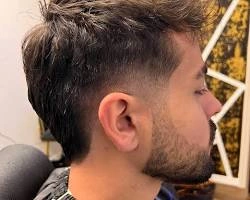
The mullet fade is one of the most polarizing yet undeniably trending men's haircuts of 2026. Once dismissed as a relic of the 1980s, the modern mullet fade has undergone a radical transformation — refined by contemporary barbering technique, paired with clean clipper fades, and adopted by everyone from professional athletes to high-fashion runways. The result is a cut that is bold, technically demanding, and genuinely distinctive.
This guide covers everything: what defines a mullet fade, how it differs from related styles, the major fade variations, how to choose the right version for your face shape and hair type, and exactly what to tell your barber to get it right.
What Is a Mullet Fade?
A mullet fade combines the defining structure of the mullet — shorter hair at the front and sides, longer hair at the back — with a clipper fade on the sides and sometimes the back perimeter. The fade element is what distinguishes the modern mullet from its 1980s predecessor: instead of hard, blunt lines between sections, the contemporary version uses a seamless gradient that blends the sides into the longer top and back.
The phrase "business in the front, party in the back" still captures the basic shape, but the mullet fade is far more nuanced than that tagline suggests. The front can be styled with a textured crop, a quiff, or even a slicked-back look. The back length ranges from a subtle neck-length extension to a dramatic, shoulder-grazing curtain of hair. The fade on the sides creates contrast and structure that elevates the whole composition.
What makes the mullet fade work in 2026 is the technical precision applied to a historically imprecise haircut. The fade controls the shape. Without it, the mullet reads as unkempt. With it, the mullet reads as intentional.
Key Characteristics of a Mullet Fade
- Length contrast: Shorter on top and sides, longer in the back — the defining shape of the style
- Faded sides: Smooth clipper gradient from short at the base to longer near the temples and crown
- Clean perimeter: The fade controls the transition between the sides and the longer back section
- Textured top: Most modern mullet fades pair a textured or disconnected top with the longer back
- Intentional back length: The back should have defined length, not just grow out — typically cut square, rounded, or into a subtle V-shape
Mullet Fade vs Similar Styles
The mullet fade occupies a specific lane among long-back haircuts, and it's easy to confuse with adjacent styles. Here's how they compare:
| Feature | Mullet Fade | Shag Fade | Wolf Cut Fade | Faux Hawk Fade |
|---|---|---|---|---|
| Back length | Defined, intentional extension | Layered, shaggy all-over | Heavy layers, curtain fringe | Short, tapered |
| Top style | Short to medium, textured | Medium layers, wispy | Long layers, curtain fringe | Spiked center ridge |
| Fade type | Sides and sometimes back perimeter | Sides | Sides | Sides |
| Overall feel | Bold, retro-modern | Casual, rock-influenced | Soft, 70s-influenced | Edgy, structured |
| Styling time | 5–10 minutes | 5–8 minutes | 5–10 minutes | 5–8 minutes |
| Maintenance | Every 3–4 weeks | Every 3–4 weeks | Every 3–4 weeks | Every 2–3 weeks |
The clearest distinction between the mullet and the shag is structure: the mullet has a defined length difference between front and back with clean sides. The shag distributes layers throughout the entire head and feels deliberately undone. The wolf cut is a shag variation with heavier curtain fringe and soft layers. The mullet fade is more geometric, more deliberate.
"The modern mullet isn't what people remember from the '80s — it's a precision cut that requires real technical skill. The fade is what makes it contemporary. Without the fade, it's just long in the back. With the fade, it becomes a statement." — observed frequently by barbers working with the style in 2026
Types of Mullet Fade Haircuts
The fade height and the length of the back section are the two variables that most fundamentally change the look of a mullet fade. Here's how the major variations break down.
Low Mullet Fade
The low mullet fade starts the taper just above the natural hairline — in the lower third of the head, near the bottom of the ears. The sides retain significant hair length and the transition is gradual. This version reads as the most subtle and wearable of the mullet fade variations, making it appropriate for more conservative environments while still carrying the distinctive back-length element.
Characteristics:
- Fade begins just above the ear, in the lower third of the head
- Significant hair retained on sides overall
- The back length extension is visible but not extreme
- Grows out cleanly over several weeks
Best for: Office environments, those new to the mullet fade, men with round or heart-shaped faces who benefit from side volume
Back lengths that work: 2–4 inches of extension past the neckline; longer lengths can feel overwhelming with the subtle side fade
Mid Mullet Fade
The mid mullet fade starts the taper around mid-ear level — roughly at eye height. This is the most versatile and commonly requested version of the mullet fade. It creates enough contrast to make the style legible without the visual intensity of a high fade.
Characteristics:
- Fade begins at mid-ear, in the middle third of the head
- Moderate contrast between sides and top
- Back length is clearly defined and intentional
- The most photographed and referenced version of the style
Best for: Most face shapes, men looking for a versatile statement cut, those comfortable with a distinctive style but not wanting to go fully extreme
Back lengths that work: 3–6 inches past the neckline; this is where the classic "business-front, party-back" proportions feel most natural
High Mullet Fade
The high mullet fade starts the taper near the temples or crown — in the upper third of the head. The sides have minimal hair and maximum contrast. This is the boldest version of the mullet fade, creating a stark visual break between the short, faded sides and the longer top and back sections.
Characteristics:
- Fade begins near the temples or crown
- Very little hair on the sides — can reach skin or near-skin
- Maximum contrast between sides and back
- Requires precise technical skill to execute cleanly
Best for: Oval and oblong face shapes, men who want an aggressive, high-impact look, those in creative or fashion-forward environments
Back lengths that work: 4 inches to full shoulder length; the dramatic side contrast calls for a proportionally dramatic back length
Skin Mullet Fade
The skin mullet fade (also called the bald mullet fade) takes the sides down to the scalp — to zero — before transitioning into the longer top and back. This is the most technically demanding and visually extreme version of the style.
Characteristics:
- Sides faded completely to skin
- Stark, unambiguous contrast between skin sides and full back length
- The disconnection between fade and back section can be clean or blended depending on preference
- Requires the most maintenance to keep the fade looking crisp
Best for: Men with angular face shapes, those who want the most modern, fashion-forward interpretation, experienced mullet fade wearers ready to escalate
Back lengths that work: Any length from neck-grazing to full shoulder; the skin fade handles any back length without visual conflict
Disconnected Mullet Fade
The disconnected mullet fade features a deliberate, visible break between the faded sides and the longer top section — no blending, just a hard line between the two sections. This is the most architectural interpretation of the mullet fade and reads more like a structural design choice than a blended style.
Characteristics:
- A visible, sharp line separates the faded sides from the top section
- The top hair is clearly longer than the sides with no gradual transition
- Often combined with a high or skin fade to maximize contrast
- The disconnection makes the cut appear almost two separate styles merged together
Best for: Fashion-forward men, those who appreciate geometric precision in their cuts, oval face shapes
Choosing the Right Mullet Fade for Your Face Shape
Face shape is the most important variable in selecting your mullet fade variation.
Oval face: The most versatile shape — any mullet fade variation works. High fades with significant back length are particularly effective for creating drama without imbalance.
Round face: Avoid high fades that add width at the sides. A low or mid fade combined with a slightly longer top section creates vertical emphasis that slims the face. Keep the top textured and upward.
Square face: Mid fades soften the strong jawline. Avoid extremely short back lengths that draw attention to the jaw. The back-length element of the mullet works well because it redirects attention away from the width.
Oblong/Long face: High fades can add visual width at the sides, which balances an elongated face. Keep the back length moderate — too much length emphasizes the vertical.
Heart face: The wider forehead and narrower chin benefit from a low to mid fade with moderate back length. Avoid skin fades that strip all volume from the sides when the top is heavy.
Diamond face: The narrow forehead and chin with wide cheekbones benefit from a low fade with volume retained at the sides. The back length adds overall length that balances the wide cheekbones.
Choosing the Right Mullet Fade for Your Hair Type
Straight hair: Every mullet fade variation is achievable. Straight hair shows the fade most cleanly and holds back length with natural movement. Lightweight texturizing products work best.
Wavy hair: The natural movement of wavy hair enhances the mullet fade's flow, particularly in the back section. Wavy hair also adds volume at the sides before the fade begins, making low and mid fades read particularly well.
Curly hair: Curly hair creates a bold, voluminous mullet fade with significant presence. A high or skin fade provides the contrast necessary to prevent the overall silhouette from appearing too round. The back length will have natural curl, creating a different visual effect than straight or wavy hair.
Thick hair: Thick hair holds every variation well. Barbers may need to thin the top section slightly to reduce bulk while maintaining the desired shape. Thick hair benefits most from high and skin fades.
Fine hair: Fine hair needs careful handling. The back section may need to be kept longer to accumulate enough visual weight. Mid fades work better than high fades, as they preserve more hair overall and prevent the back section from looking thin.
Getting the Mullet Fade Right: What to Tell Your Barber
Clear communication prevents misunderstandings, especially with a style as inherently subjective as the mullet fade. Here's a practical script:
The basics:
- "I want a mullet fade — [low / mid / high / skin] fade on the sides and back"
- "Keep the top [length] — I want [texture / volume / slick]"
- "I want the back to extend to [neck / jaw / shoulder] length"
The details:
- "Clean up the perimeter at the neckline with a [square / rounded / V-shape] finish"
- "Blend the fade into the back section, don't disconnect it" OR "Leave a visible break — I want the disconnected look"
- "I want the sides to go down to [skin / very short / moderate]"
If you have a reference: Always bring a photo. The mullet fade exists on a wide spectrum from subtle to extreme, and verbal descriptions rarely capture the exact variation you have in mind. A photo eliminates ambiguity.
What to avoid: Don't just say "mullet" without specifying the fade height and back length — barbers will interpret this very differently. Don't say "a bit of length in the back" without clarifying how much; "a bit" means different things in different shops.
Mullet Fade Styling Tips
The mullet fade requires a two-part styling approach: the top and the back behave differently and respond to different products.
For the top:
- Use a matte clay or paste for texture and definition without shine
- Work product through damp hair, then shape with fingers or a brush
- For volume, rough-dry the top upward before applying product
- For a slick look, use pomade on dry hair and comb back
For the back:
- The back length often needs lightweight product to prevent it from flattening
- A small amount of texturizing spray or light oil adds movement and prevents the back from looking limp
- Avoid heavy products in the back — they weigh the hair down and reduce the natural movement that makes the mullet fade distinctive
Drying technique:
- Rough-dry the top first with a blow dryer, using your fingers to build shape
- Let the back air dry or use a diffuser if you have waves or curls
- Finish by setting the front shape and leaving the back with natural movement
Mullet Fade Maintenance Schedule
The mullet fade has specific maintenance requirements because two different length zones are growing out simultaneously.
Every 2–3 weeks: The fade needs refreshing — this is the fastest-growing and most visible part of the cut. Fades grown out past 3 weeks start to lose their definition and the overall shape softens.
Every 4–6 weeks: A full cut to re-establish the top length and trim the back section to maintain proportions. The back should be trimmed to stay at your intended length — most men find it needs a trim every 4–6 weeks to maintain clean ends.
Between appointments: Use a fine-tooth comb or a boar bristle brush to keep the back section looking intentional. Detangle after washing and apply a small amount of leave-in conditioner if the back is long enough to dry out.
Color considerations: If you're adding bleach or color to your mullet fade (a common pairing in 2026), factor in color maintenance on top of cut maintenance. Bleached ends on the back section will need toning every 4–6 weeks depending on how light you go.
Mullet Fade Products: What Works
Matte clay (top): Provides texture and hold without shine — the best all-purpose option for styling the top section. Works across most hair types.
Pomade (top, slick look): Oil-based pomades provide high shine and strong hold for a slicked-back or retro look. Water-based pomades wash out easier and provide medium hold with medium shine.
Texturizing spray (back): Lightweight spray adds body and movement to the back section without weighing it down. Spray on damp hair before air drying.
Sea salt spray: Enhances natural texture and adds a slightly matte, beachy finish. Particularly effective on wavy hair in the back section.
Leave-in conditioner (back, if long): Longer back sections dry out faster and benefit from a lightweight leave-in. Apply a small amount to damp hair and comb through.
Frequently Asked Questions
Is the mullet fade professional? This depends entirely on the environment. A low mullet fade is widely accepted in creative industries, fitness, hospitality, and many modern offices. A skin mullet fade with extreme back length will stand out anywhere. Know your workplace culture before committing to the more dramatic versions.
How long does it take to grow a mullet fade? If you're starting from a standard short cut, reaching a true mullet with several inches of back length takes 4–8 months depending on your hair's growth rate and your desired back length. Growing out the back while maintaining clean faded sides is the approach — get regular fade touch-ups every 3 weeks while the back grows.
Can the mullet fade work on thinning hair? It can work, but requires adjustment. Avoid skin fades that expose the scalp on the sides while the top appears thinner. A mid fade with moderate back length creates the most balanced proportions for thinning hair. The back length draws attention away from the crown.
What's the difference between a modern mullet and a classic mullet? The classic 1980s mullet had blunt, hard lines between sections — no fading, no blending. It was frequently worn with a perm or feathered layers. The modern mullet fade replaces those hard lines with seamless clipper blends, pairs the back with more controlled styling, and uses contemporary proportions that feel intentional rather than accidental.
How do I maintain the back section length between cuts? Use a lightweight texturizing spray or leave-in conditioner to keep the back ends from drying out. Comb through gently after washing to prevent tangles. If the ends split or dry out, get a small trim to remove the damage — split ends undermine the clean look the mullet fade requires.
The Modern Mullet Fade in 2026
The mullet fade in 2026 has found its place not as a nostalgia act but as a genuinely contemporary men's haircut. Athletes wear it cropped tight on top with skin fades and neck-grazing back sections. Fashion weeks have featured versions with extreme back lengths and bleached ends. Barbershops report it consistently among their most requested cuts alongside the taper fade and drop fade.
What's sustained the mullet fade beyond a brief trend cycle is the same thing that sustains every successful men's haircut: it's technically specific enough to require a skilled barber, distinctive enough to be noticed, and versatile enough to accommodate a wide range of personal styles within its parameters. The bald fade on the sides is what elevates it from a throwback to a modern statement — clean, precise, and unmistakably deliberate.
Whether you go low and subtle or high and dramatic, the mullet fade rewards commitment. Half measures rarely work with this cut. Decide on your variation, communicate it clearly to your barber, and maintain the fade before it grows out. Do that, and the mullet fade delivers on its considerable potential.
See It on Yourself First
Not sure the mullet fade is your thing? Use BaldFade's mullet fade preview tool — upload a photo and see the exact cut on your own face in about 30 seconds, before you commit at the barbershop. You can also try our AI preview tool for other fade styles.