

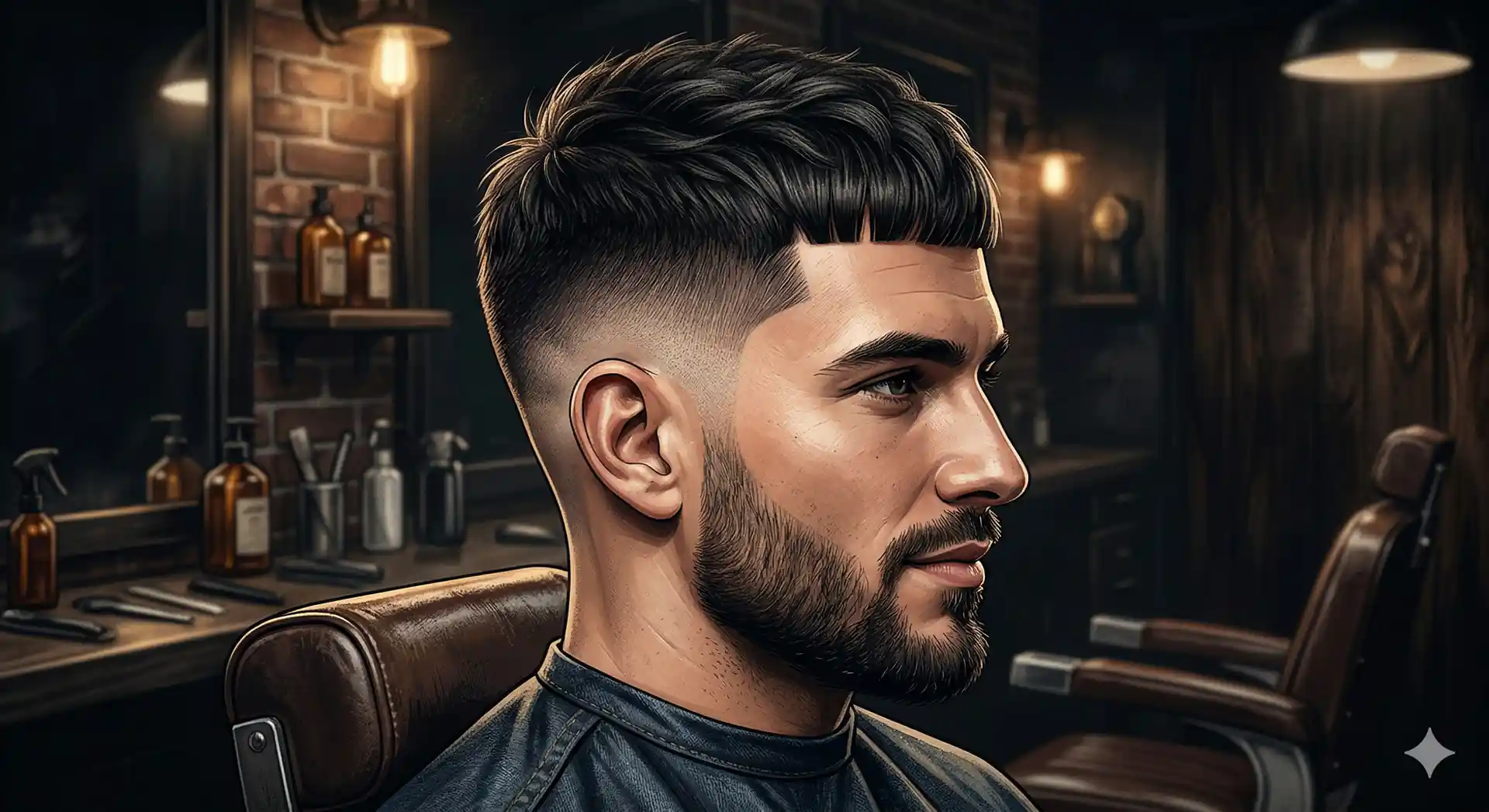
The caesar fade haircut has made a powerful comeback—and in 2026, it sits firmly at the intersection of classic barbering heritage and modern edge. Named after the famously depicted hairstyle of Julius Caesar, this cut features a short, horizontally combed fringe paired with uniformly short hair on top, elevated by a precisely blended fade on the sides and back. The result is a no-nonsense, clean-cut style that works for everyone from students to executives.
If you've been looking for a low-maintenance cut that still looks intentional and sharp, the caesar fade might be exactly what you need. This guide covers everything: what defines the cut, how it differs from similar styles, which variation suits your face shape, and how to communicate exactly what you want to your barber.
What Is a Caesar Fade Haircut?
A caesar fade combines two distinct elements: the caesar cut (characterized by short, forward-combed hair with a horizontal fringe across the forehead) and a fade (a seamless gradient that blends hair from shorter lengths at the sides and back into the longer hair on top). Together, these elements create a clean, structured style with a distinctly Roman aesthetic updated for modern sensibilities.
The defining feature of the caesar cut is the fringe—hair is cut short on top (typically 1–2 inches) and combed or pushed forward toward the forehead, creating a uniform horizontal line. Unlike a quiff or pompadour that lifts hair upward, the caesar lies flat and forward. The fade element sharpens the contrast, removing bulk from the sides and back to let the structured top take center stage.
Key Characteristics of a Caesar Fade
- Forward-combed fringe: Hair on top is brushed toward the forehead, not swept up or back
- Uniform length on top: Typically 1–2 inches, consistent across the crown
- Horizontal hairline: The fringe creates a clean, straight line across the forehead
- Blended sides: Fade starts at low, mid, or high point depending on the variation
- Minimal styling required: The cut holds its shape with little to no product
- Timeless silhouette: Clean, structured profile from every angle
Caesar Fade vs Similar Styles
The caesar fade is often confused with other short fade cuts. Understanding the differences helps you choose what you actually want and communicate it clearly.
| Feature | Caesar Fade | Crew Cut Fade | French Crop Fade | Buzz Cut Fade |
|---|---|---|---|---|
| Top Length | 1–2 inches | 1–3 inches | 1–2 inches | Under 1 inch |
| Fringe Direction | Forward (horizontal) | Textured, no set direction | Forward with textured tips | No fringe |
| Defining Feature | Flat horizontal fringe | Natural texture, tapered top | Choppy textured fringe | Ultra-uniform length |
| Styling Effort | Minimal | Low–Medium | Low | None |
| Best For | Classic, clean look | Versatile everyday | Edgy, fashion-forward | Ultra low maintenance |
| Maintenance | Every 3–4 weeks | Every 2–3 weeks | Every 2–3 weeks | Every 1–2 weeks |
The caesar fade and french crop fade are the most commonly confused pair. The key distinction: the caesar fringe lies flat and even, while the french crop fringe is usually choppy or textured with a slight downward drop. If you want the clean Roman-inspired look, specify "caesar" to your barber.
"The caesar cut is one of the most misunderstood styles—a lot of men ask for it but describe a french crop. Bringing a photo is the simplest way to get exactly what you're after." — experienced barber perspective
Types of Caesar Fade Haircuts
The caesar fade is a versatile framework. Here are the most popular variations trending in 2026:
Low Caesar Fade
The fade starts just above the ear and gradually decreases toward the neckline. This creates a subtle contrast that looks polished without being aggressive—ideal for professional environments.
Best for:
- Office and formal settings
- First-time fade wearers
- Men who prefer understated style
- Those who want longer time between barber visits
Mid Caesar Fade
The fade begins at the temple level, splitting the difference between subtle and bold. This is the most popular variation—versatile enough for work and sharp enough for a night out.
Best for:
- Everyday wear across settings
- Most face shapes
- Men wanting balance between style and maintenance
High Caesar Fade
The fade starts near the temples or parietal ridge, creating dramatic contrast between the short structured top and the faded sides. This is the most fashion-forward caesar variation.
Best for:
- Men who want maximum visual impact
- Fashion-forward or urban aesthetics
- Those with thick hair who want to reduce bulk dramatically
Caesar Skin Fade
Any of the above variations taken all the way to bare skin at the base. The transition from skin to hair is completely seamless, with zero visible guard lines.
Best for:
- Maximum sharpness and definition
- Men who visit the barber regularly
- Athletes and those in hot climates who prefer minimal hair
Caesar Taper Fade
A softer version where the fade doesn't fully reach skin, instead tapering to a very short length at the neckline and around the ears. More forgiving as it grows out.
Best for:
- Those who want clean but not stark contrast
- Longer intervals between barber visits
- Professional conservative settings
Caesar Fade with Hard Part
A shaved line (hard part) is cut into the side of the head, separating the top hair from the faded sides. This adds geometric detail and a modern edge to the classic caesar.
Best for:
- Men who want extra visual definition
- Those who like a signature styling detail
- Pairing with beard or stubble looks
Caesar Fade with Line Up
A crisp, sharp edge-up along the hairline frames the forehead with precise lines. The line-up accentuates the horizontal fringe and adds a polished finish.
Best for:
- Men with rounder hairlines who want definition
- Urban and streetwear aesthetics
- Those who maintain frequent barber appointments
Best Caesar Fade Styles for 2026
| Style | Top Length | Fade Level | Best Feature | Maintenance |
|---|---|---|---|---|
| Low Caesar Fade | 1.5–2 inches | Low | Professional, subtle | Every 4 weeks |
| Mid Caesar Skin Fade | 1–1.5 inches | Mid to skin | Most versatile | Every 2–3 weeks |
| High Caesar Fade | 1–2 inches | High | Maximum contrast | Every 1–2 weeks |
| Caesar Hard Part | 1–2 inches | Mid or High | Geometric detail | Every 2 weeks |
| Caesar Line Up | 1–2 inches | Any | Sharp framing | Every 1–2 weeks |
| Caesar Fade with Beard | 1.5–2 inches | Low or Mid | Mature, masculine | Every 2–3 weeks |
Choosing the Right Caesar Fade for Your Face Shape
The caesar fade's clean horizontal fringe interacts with face shape in specific ways. Choosing the right variation can optimize your proportions significantly.
Round Face
The caesar fade is an excellent choice for round faces. The horizontal fringe keeps attention centered at the forehead rather than widening the face, while a mid or high fade adds height visually. Avoid very short fringes that expose too much forehead without any upward height.
Recommended: Mid or high caesar fade, fringe at moderate length (1.5 inches)
Oval Face
The oval face is the most versatile—any caesar fade variation works well. You can experiment freely with low, mid, or high fades and different fringe lengths without worrying about disrupting proportions.
Recommended: Any variation based on personal preference
Square Face
The soft, forward-lying fringe of the caesar cut works well for square faces, gently offsetting sharp angular features. A low or mid fade keeps the overall profile clean without adding excessive height that would clash with a strong jawline.
Recommended: Low or mid caesar fade, taper rather than skin fade
Heart-Shaped Face
The narrow chin and wider forehead of a heart-shaped face benefit from the caesar's horizontal emphasis at the top. Keep the sides less dramatic (low or mid fade) to avoid over-emphasizing the wider upper face.
Recommended: Low to mid caesar fade, fringe length at 1–1.5 inches
Oblong/Rectangular Face
The horizontal fringe actually helps oblong faces by visually adding width at the top rather than height. Avoid high fades that would further elongate the appearance. A low fade with a slightly fuller fringe works best.
Recommended: Low caesar fade, fringe at 1.5–2 inches, avoid skin fade
Diamond Face
The caesar's clean lines complement diamond faces by providing visual structure without adding unwanted width at the temples. A mid fade is the sweet spot.
Recommended: Mid caesar fade or mid taper fade
How to Ask Your Barber for a Caesar Fade
Clear communication saves you from disappointment. Here's exactly how to describe the cut:
Step 1: Name the Cut and Specify the Fringe
Start with: "I'd like a caesar fade."
Then clarify the fringe: "I want the top kept around 1.5 inches, combed forward flat—not textured or swept up, just the classic horizontal fringe."
Step 2: Specify the Fade Level
Choose your height:
- "I want a low fade, staying below the temples"
- "I'd like a mid fade starting around the temple area"
- "Take it high, starting near the parietal ridge"
Specify skin preference:
- "Take the sides down to skin"
- "Keep a little length at the bottom, don't go fully to skin"
Step 3: Mention Special Details
- Line-up: "Can you add a crisp edge-up around the hairline?"
- Hard part: "I'd like a hard part on the left side"
- Neckline: "Keep the neckline tapered/square" (specify your preference)
- Beard blend: "Can you fade it into my stubble/beard?"
Step 4: Show a Reference Photo
The caesar vs french crop confusion is real. Showing a clear side-profile and front-facing photo removes all ambiguity. Look for photos that clearly show the flat, horizontal fringe—not a textured or angled one.
Sample Script for Your Barber
"I'd like a mid caesar fade—take the sides down to a low skin fade starting at the temple, keep the top about 1.5 inches and comb it forward flat for a clean horizontal fringe. Add a sharp line-up around the hairline please."
Caesar Fade Styling Guide
One of the biggest appeals of the caesar fade is how little product it needs. Here's how to style it and which products work best.
Daily Styling (No-Product Look)
The caesar cut naturally falls into its intended shape after washing. Simply comb or push the damp hair forward and it will dry in position. This is the zero-effort approach that most caesar wearers prefer.
Light Hold (Natural Finish)
For a slightly more controlled look without added shine:
- Product: Light styling cream or light matte paste
- Method: Work a pea-sized amount through slightly damp hair, push forward
- Result: Defined fringe, natural texture, no greasiness
Medium Hold (Defined Look)
For sharper definition and all-day hold:
- Product: Medium-hold matte clay
- Method: Apply to towel-dried hair, comb forward firmly
- Result: Clean, structured fringe with good control
Best Products for Caesar Fades
| Product Type | Hold | Finish | Best For |
|---|---|---|---|
| Matte Clay | Strong | Matte | Most caesar types, everyday |
| Styling Cream | Light | Natural | Fine hair, soft look |
| Pomade (water-based) | Medium | Low shine | Sleek, classic appearance |
| Fiber Paste | Medium | Matte | Thick hair, texture definition |
Avoid heavy oils or high-shine products on the top—they make the fringe look greasy and can weigh it down unevenly.
Caesar Fade for Different Hair Types
Straight Hair
Straight hair is the ideal texture for a caesar cut. The fringe naturally lies flat and holds the horizontal line without much effort. Any fade variation works well.
Wavy Hair
Wavy hair can work with a caesar fade if the top is kept slightly shorter (under 1.5 inches) so waves don't disrupt the flat fringe. A light matte product helps tame the wave on top.
Curly Hair
Curly hair requires slightly more product to achieve the flat fringe. Some men with tighter curls opt for a texturizer or light relaxer on top to get the smooth horizontal line. Alternatively, a "soft caesar" look embraces some curl texture while maintaining the forward direction.
Coily/Afro-Textured Hair
A caesar on coily hair is fully achievable and looks great when executed well. The fringe will have more body and texture, creating what some call a "textured caesar." Barbers experienced with afro-textured hair can achieve the classic shape while working with natural curl patterns.
Thin/Fine Hair
Fine hair benefits enormously from the caesar fade. The short uniform length prevents thinning patches from showing and the fade keeps the sides tight, maximizing the appearance of density on top.
Receding Hairline
The caesar fade is one of the best cuts for a receding hairline. The forward-combed fringe naturally draws the eye toward the face rather than the hairline, while the short uniform length on top minimizes the contrast between hair and scalp.
Caesar Fade Maintenance Schedule
| Variation | Recommended Visit Frequency | What to Maintain |
|---|---|---|
| Low Taper Caesar | Every 3–4 weeks | Fade freshness, fringe length |
| Mid Caesar Fade | Every 2–3 weeks | Fade crispness, top length |
| High Caesar Fade | Every 1–2 weeks | Dramatic fade, sides clean |
| Caesar Skin Fade | Every 1–2 weeks | Skin fade, line-up |
| Caesar with Line Up | Every 1–2 weeks | Line-up definition |
Between Visits
- Keep the fringe combed forward to train the hair growth direction
- Trim any stray hairs above the ear line with a small trimmer
- Moisturize exposed skin areas if you have a skin fade
- Use a light styling product to maintain the flat fringe shape
Common Caesar Fade Mistakes to Avoid
- Asking for a fringe and getting a french crop: Be explicit about the flat, horizontal fringe—not textured or choppy
- Leaving the top too long: Over 2.5 inches and the fringe starts to look overgrown rather than intentional
- Wrong fade height for your face shape: High fades elongate the face—avoid on long face shapes
- Skipping product on wavy/curly hair: Without product, the fringe won't hold its horizontal shape
- Ignoring neckline preference: Specify tapered or squared before your barber starts
- Going too long between cuts: Especially with skin fades, regrowth shows quickly on the sides
Frequently Asked Questions
Is the caesar fade suitable for professional environments?
Absolutely. The low and mid caesar fade are among the most professional-looking cuts available. The clean fringe, structured top, and faded sides create a polished, well-groomed appearance appropriate for offices, interviews, and formal settings.
How is the caesar fade different from the french crop fade?
The primary difference is in the fringe texture and direction. The caesar fringe is flat, uniformly short, and lies forward horizontally. The french crop typically features a textured, slightly choppy fringe that may have a slight downward drape. The caesar looks more classic and Roman; the french crop looks more fashion-forward and European.
Can men with a receding hairline wear a caesar fade?
Yes—in fact, the caesar fade is an excellent choice for receding hairlines. The forward-combed fringe reduces the visual impact of a receding hairline by directing attention toward the face. Paired with a low or mid fade, it creates a clean, confident look that works with the hairline rather than against it.
How long does the top need to be for a caesar cut?
Typically 1 to 2 inches. Under 1 inch and the fringe loses its defining horizontal quality; over 2.5 inches and it starts to look overgrown or transitions into a different style. The sweet spot for most men is around 1.5 inches.
Does the caesar fade work with a beard?
Yes, and it's a particularly strong combination. A well-maintained mid or low caesar fade transitions naturally into a beard or stubble, creating a cohesive frame for the face. Ask your barber to fade the sides down into your beard for a seamless blend.
How much does a caesar fade cost?
Expect to pay between $25 and $45 at most quality barbershops. More intricate details like a hard part or line-up may add $5–$10. High-end barbershops in metropolitan areas typically charge more.
Is the caesar fade easy to maintain at home?
The top styling is simple—just comb forward in the morning, with or without product. The fade itself requires a barber visit. Between cuts, you can maintain a clean neckline with clippers if needed, but the fade lines should be refreshed professionally.
Preview Your Caesar Fade with BaldFade AI
Not sure which caesar fade variation suits your face shape? Use BaldFade's AI preview tool to visualize your new look before committing. Want this exact look? Try the Caesar fade preview tool on your own photo first. Upload a photo, choose your preferred caesar variation, and see an instant transformation.
Our tool lets you:
- Compare low, mid, and high caesar fade options on your actual face
- Test caesar fade with and without a line-up or hard part
- See how different fringe lengths look on your proportions
- Build a reference image to show your barber
Conclusion
The caesar fade earns its enduring popularity through simplicity and versatility. A flat forward fringe, uniformly short top, and precisely blended sides combine into a cut that works from the boardroom to the barbershop—minimal effort, maximum payoff.
In 2026, the style lands at the sweet spot between retro and contemporary. Men are gravitating toward cuts that feel deliberate without being high-maintenance, and the caesar fade delivers exactly that. Whether you opt for a subtle low taper, a sharp mid skin fade, or a high-contrast high fade with a line-up, the structure of the caesar cut guarantees a clean, intentional result every time.
Understanding your face shape, communicating clearly with your barber, and choosing the right variation for your lifestyle will ensure your caesar fade consistently looks as sharp as the day you left the chair. Ready to see how it would look on you? Try our AI preview tool and take the guesswork out of your next barbershop visit.