

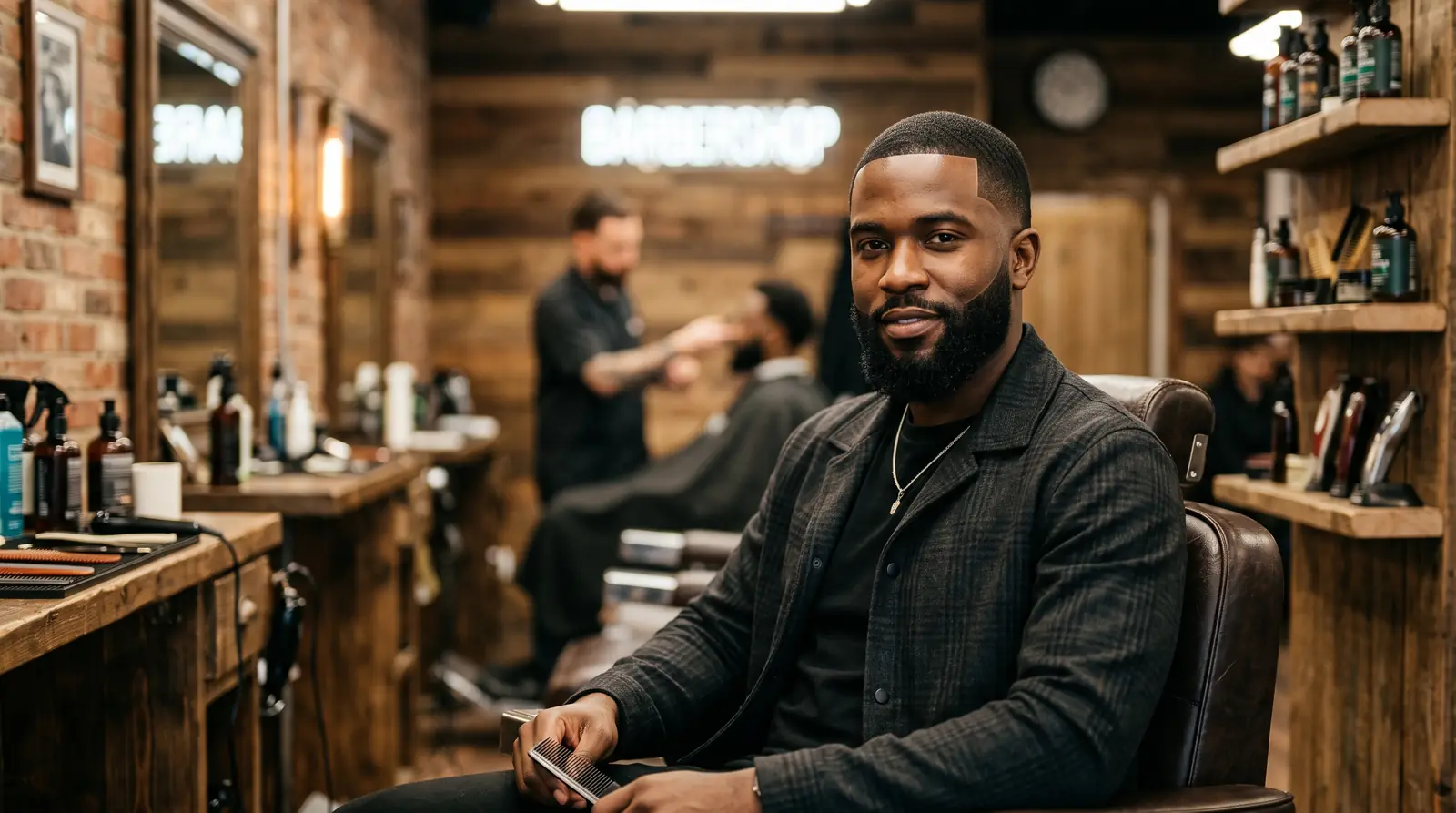
Ask any barber what single service transforms a haircut the most, and you'll hear the same answer: a line up. Also called a shape up, edge up, or lineup, this precision technique redefines the natural hairline at the forehead, temples, and sideburns into clean, sharp geometric edges. The effect is immediate—a haircut that looked a little rough becomes intentional and polished in minutes.
In 2026, the line up has gone from a finishing touch to a standalone style statement. Men are requesting defined edges as part of their regular grooming routine, not just as a complement to longer styles. Whether you've got a low fade, a high taper, a textured crop, or even a longer natural style, a precise line up is the detail that tells the world you put in the effort. This guide breaks down everything: what a line up is, how it works with different haircuts, how to choose the right style for your face, and how to communicate exactly what you want at the barber.
What Is a Line Up Haircut?
A line up is a barbering technique that uses clippers, a straight razor, or a trimmer to create defined, sharp edges along a man's natural hairline. It focuses on three primary areas:
- The forehead hairline: Cleaned up and shaped into a straight horizontal line, a slight arc, or a defined temple-to-temple edge
- The temples: The corners of the hairline are squared off or rounded depending on the desired look
- The sideburns: Trimmed to a consistent length and shaped into a clean bottom edge
The result is a frame around the face that makes any haircut look more intentional. A line up doesn't change the length or style of the hair on top—it simply refines the boundary between where your hair ends and your skin begins.
Shape Up vs Line Up: Is There a Difference?
The terms are used interchangeably in most barbershops, but some barbers draw a subtle distinction:
- Line up: Refers specifically to the technique of straightening and defining the hairline
- Shape up: Sometimes implies a more involved reshaping of the entire hairline, including adjusting the natural growth pattern to create a different silhouette
In practice, when you ask for either term at a barbershop, you'll get the same service. If you have a specific shape in mind (curved vs. straight forehead line, for example), bring a reference photo regardless of which term you use.
Why a Line Up Makes Such a Visible Difference
The human eye is drawn to defined lines and contrast. A clean line up creates a crisp boundary between hair and skin, which:
- Frames the face: Like a well-fitting frame on a painting, clean edges draw attention to your features rather than letting your haircut trail off ambiguously
- Makes fades look sharper: Any fade—low fade, mid fade, high fade—looks exponentially more refined with a line up at the forehead
- Adds structure to longer styles: Even men with medium-length hair benefit from defined temples and sideburns
- Creates the illusion of density: A crisp hairline boundary makes hair appear thicker at the front
- Extends the life of a cut: A line up makes a two-week-old haircut look like it was done yesterday
"A line up is the difference between a haircut that looks done and one that looks finished. It's the last 10% that accounts for 50% of the visual impact." — common perspective among experienced barbers
Types of Line Up Styles
Not all line ups are created equal. The shape of your edges makes a significant difference in how the overall look reads.
The Square Line Up (Classic Edge Up)
The most popular style: a straight horizontal line across the forehead with 90-degree corners where the hairline meets the temples. This is the look most people picture when they hear "line up."
Best for:
- Square and oval face shapes
- Men who want a bold, structured look
- Pairing with skin fades or high fades
- Shorter haircuts where geometry complements the overall clean aesthetic
The Rounded Line Up
The corners of the hairline are softened into a slight curve rather than sharp 90-degree angles. More natural-looking while still being defined.
Best for:
- Round or heart-shaped face shapes (avoids adding width at the temples)
- Men transitioning from no line up to their first shape up
- Professional environments where a softer edge reads better
- Pairing with low fades or taper fades
The Curved/Arch Line Up
The forehead hairline is shaped into a gentle downward arc rather than a straight line. Creates a more organic shape that works with the natural growth pattern.
Best for:
- Men with naturally curved hairlines who want to enhance rather than fight their natural shape
- Oval and longer face shapes
- Styles that lean more natural, like textured crops or waves
The Temple Fade with Line Up
Rather than a straight line up, the barber blends the temples into the fade and creates a defined edge only at the very top of the forehead. This creates a seamless transition between the fade and the hairline.
Best for:
- Temple fades and burst fades
- Men who want definition without a harsh geometric look
- Natural and wavy hair types
The Widow's Peak Line Up
Some men have a natural widow's peak—a downward V-shape in the center of the forehead hairline. A line up can either enhance this natural feature or minimize it depending on preference.
Best for:
- Men who want to lean into a naturally pointed hairline
- Diamond and heart face shapes where the widow's peak creates visual width at the forehead
Line Up Haircut Comparison Table
| Line Up Style | Forehead Shape | Corners | Best Fade Pairing | Maintenance |
|---|---|---|---|---|
| Square (Classic) | Straight | 90° sharp | Skin fade, High fade | Every 1–2 weeks |
| Rounded | Straight/soft | Slightly curved | Low fade, Taper | Every 2 weeks |
| Curved/Arch | Gentle arc | Natural | Drop fade, Mid fade | Every 2 weeks |
| Temple Blend | Blended into fade | None | Temple fade, Burst fade | Every 2–3 weeks |
| Widow's Peak | V-center | Pointed | Any fade | Every 1–2 weeks |
How a Line Up Works With Different Haircuts
The line up isn't a standalone haircut—it's a finishing technique that elevates whatever cut you already have. Here's how it integrates with the most popular styles:
Line Up With a Fade
This is the most common pairing. A bald fade or skin fade already creates dramatic contrast at the sides; a line up carries that sharpness to the front. The result is a haircut that looks clean from every angle.
The combination works especially well with:
- Low fades: Subtle fade + defined line up = polished and professional
- Mid fades: Medium contrast that the line up anchors at the top
- High fades: Bold fade + bold line up = maximum definition
- Drop fades: The curved fade shape pairs naturally with a rounded or arched line up
Line Up With a Taper
A taper fade naturally blends into the hairline, but adding a defined line up at the forehead creates a crisp cap to the overall style. It's a slightly softer look than a full skin fade but with the same level of intentionality.
Line Up With a Comb Over or Slick Back
A comb over fade or slick back fade relies on clean side parting and swept-back styling on top. A line up completes the architecture by defining where the front of the hair meets the forehead.
Line Up With a Textured Crop or Caesar
Short textured cuts like the caesar fade or french crop fade are defined by their front fringe. A sharp line up at the temples and forehead makes the front of these cuts look intentional rather than just "trimmed."
Line Up With Natural or Longer Hair
Even men with medium-length or longer hair benefit from a line up at the temples and sideburns. It takes a look from "grown out" to "intentionally styled" without touching the length.
Choosing the Right Line Up for Your Face Shape
Your face shape influences which line up geometry flatters you most:
Oval: Lucky—most line up styles work. Square and rounded edges both look great. Go with what suits your personality.
Square: Avoid adding more sharp corners. A rounded or curved line up softens the angular jaw without fighting your natural features.
Round: A square line up adds structure and the appearance of length. Avoid a rounded line up that echoes the face's natural curves.
Oblong/Long: A slightly curved or arch line up reduces the visual length. Avoid very straight, horizontal lines that emphasize height.
Heart: Rounded or curved edges at the temple soften the wider forehead. Avoid sharp square corners that add visual width at the top.
Diamond: A widow's peak line up or a gentle arch complements the naturally narrow forehead and chin.
How Long Does a Line Up Last?
This is one of the most common questions—and the honest answer is: not long, if you want it looking crisp.
- Days 1–5: Looks freshly done, edges are clean and precise
- Days 6–10: Natural growth begins to blur the edges slightly; still looks intentional
- Days 11–14: Edges have softened noticeably; the line up is "there" but not sharp
- Days 15+: Significant fading of the line; most men with a visible line up will want a touch-up
For men who wear their line up as a statement (especially with skin fades or high fades), a touch-up every 1–2 weeks is typical. Men who just want maintained edges with a more natural fade can usually go 2–3 weeks between barber visits.
Some men maintain their own line up between visits using a T-outliner or detail trimmer, though this requires practice and steady hands to avoid uneven lines.
What to Tell Your Barber
Clear communication gets you the exact line up you want. Use this framework:
1. Specify the shape
- "Square edge up" or "straight line up with sharp corners"
- "Rounded line up" or "soft edge up"
- "Arch/curved line up following my natural hairline"
2. Indicate how aggressive
- "Keep it natural—just clean up what's there"
- "Bring the line down slightly for a cleaner look"
- "I want it as sharp as possible—really defined edges"
3. Reference the corners
- "Square the corners off"
- "Round the corners—nothing too angular"
4. Mention the sideburns
- "Take the sideburns to [your preferred length—earlobe, mid-ear, etc.]"
- "Keep the sideburns, just trim them straight"
5. Bring a photo The most effective communication tool. Pull up a reference image that shows the exact line up style you want from the front and side.
DIY Line Up: What You Need to Know
Getting a line up from a professional barber will always produce better results, but some men maintain their edges at home between visits. Here's what's involved:
Tools needed:
- A T-blade outliner trimmer (Andis T-Outliner or Wahl Detailer are popular choices)
- A handheld mirror or phone camera for the back view
- Good lighting
- A steady hand
The process:
- Start with dry hair—wet hair obscures the natural hairline
- Use the T-blade to outline the forehead hairline first, working from the center outward
- Define the temple corners carefully—this is where most DIY errors happen
- Clean up the sideburns last, working downward
- Use a straight razor or edge gel for ultra-precise lines if desired
Common DIY mistakes:
- Going too high (cutting into the natural hairline, which is very difficult to fix)
- Uneven corners (left side vs. right side at different heights)
- Over-trimming the temples (creates a disconnected look)
The safest approach: let the barber set the line, then use clippers to maintain the existing boundary rather than reshaping it yourself.
Line Up Haircut Maintenance Tips
To keep your line up looking sharp between barber visits:
- Keep a consistent schedule: Once you establish a line up routine, sticking to a set interval (every 1–2 weeks) prevents the hairline from drifting and looking messy
- Use edge control products: A light edge control gel or pomade can smooth down baby hairs near the hairline and keep the edge looking defined even as it grows
- Avoid excessive touching: Repeatedly touching the hairline transfers oils and can cause breakouts that affect the precision of future line ups
- Communicate changes early: If you want to adjust the shape of your line up, tell your barber before they start rather than after
FAQ: Line Up Haircut
Does a line up work on all hair types? Yes. A line up works on straight, wavy, curly, and coily hair. The technique adapts to the texture and growth pattern of each hair type. Men with coily or tightly curled hair often find that a line up makes the most dramatic visual difference.
Will a line up make my forehead look bigger? A straight line up raises the perceived boundary of the hair, which can slightly elongate the face. This is a benefit for round faces but can exaggerate an already-long or high forehead. A curved or arch line up that follows the natural hairline avoids this issue.
Can I get a line up without a fade? Absolutely. A line up is a standalone service that works with any haircut. Men with longer hair, buzz cuts, naturals, or even dreadlocks get line ups to define their edges without changing anything else.
How much does a line up cost? As a standalone service, a line up or shape up typically runs $10–$25 depending on location and the barbershop. As part of a full haircut, it's usually included or available for a small add-on fee of $5–$10.
Does a line up hurt? No. The process involves clippers or a trimmer along the hairline and a straight razor for fine-tuning. The razor can feel slightly sharp against the skin but shouldn't be painful when done by an experienced barber.
Can I get a line up if my hairline is receding? Yes, though the approach changes. A barber can work with your natural hairline rather than trying to create a line where hair isn't growing. Many men with receding hairlines opt for a rounded or softened edge up that complements rather than fights the recession.
How is a line up different from a neckline cleanup? A line up focuses on the forehead, temples, and sideburns. A neckline cleanup (also called blocking or a neck taper) focuses on the back of the neck. Many men get both services together for a complete, finished look.
Get the Sharpest Version of Any Haircut
The line up is the detail that separates a haircut that was trimmed from one that was crafted. It takes any style—from a textured crop to a slick back fade—and adds the geometric precision that makes people notice. Whether you want a bold square edge up or a softer arch that follows your natural hairline, the principle is the same: defined edges frame your face and tell the world you take your appearance seriously.
Book your next appointment with a line up in your request, bring a reference photo showing the exact edge style you want, and walk out with the sharpest version of whatever cut you're already wearing.
Explore more barber guides: Low Fade | Mid Fade | High Fade | Skin Fade | Taper Fade | Temple Fade