
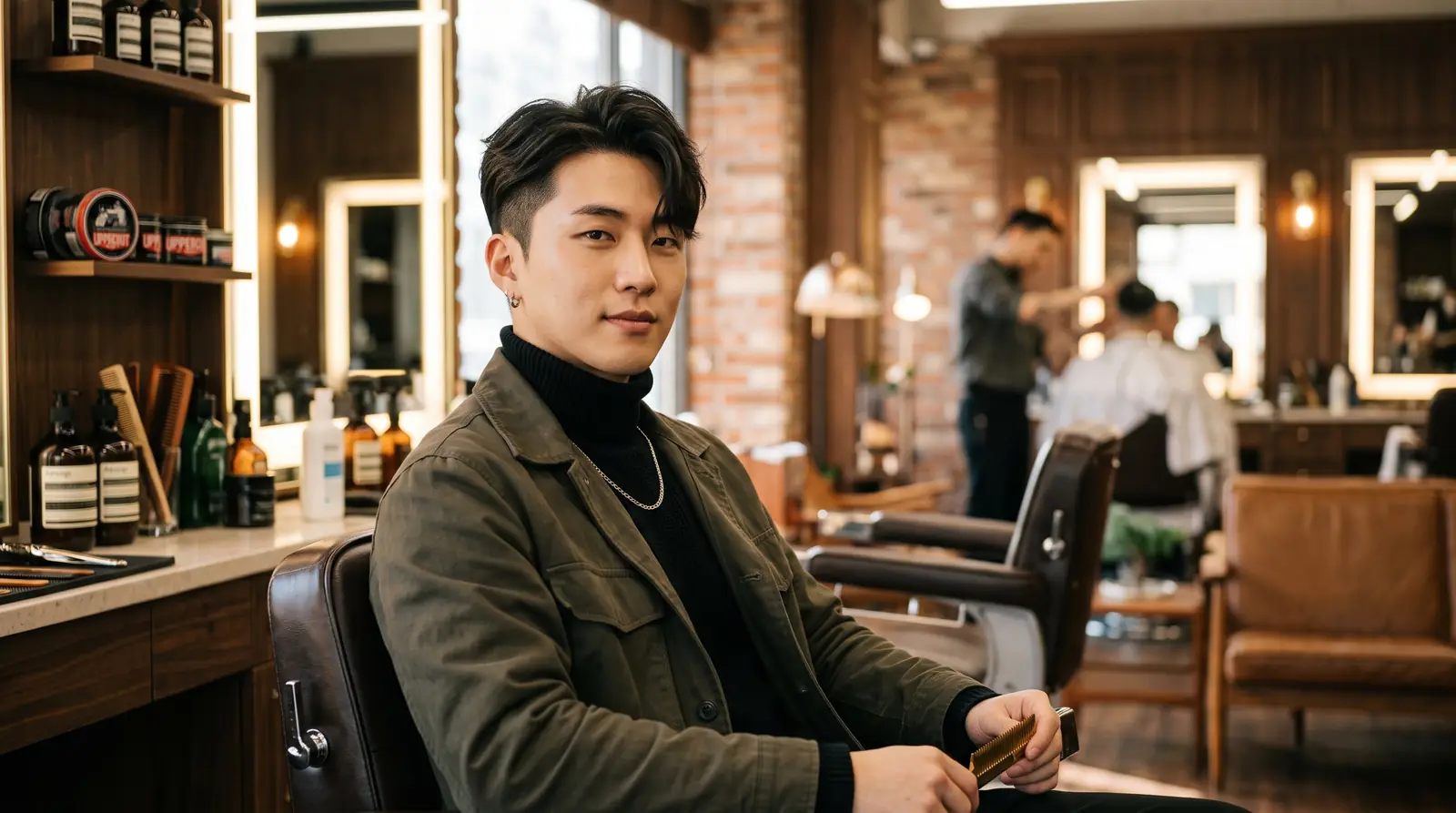
A two block fade separates a longer top from shorter sides and back, using a fade in the lower section. The contrast depends on the top length and how much side coverage remains.
If you prefer a more pronounced boundary between top and sides, compare the undercut fade and its disconnected variations.
What Is a Two Block Haircut?
The two block haircut is a men's style defined by two visually distinct "blocks" of hair. The top section is left long and voluminous—typically 3 to 6 inches or more—while the sides and back are cut dramatically shorter, often to near-skin level. The contrast between these two sections is the defining visual element of the style.
Unlike a traditional undercut, the two block haircut doesn't always feature a razor-clean separation line. The transition can be sharp and deliberate or soft and blended, depending on the variation. What remains constant is the pronounced difference in length between the heavy, expressive top and the minimalist sides.
Key Characteristics of a Two Block Cut
- Voluminous top: Long hair on the crown that can be styled in multiple directions
- Short sides and back: Cropped close to create the "block" contrast
- High visual contrast: The gap between top and sides is intentional and prominent
- Style versatility: Can be worn messy, slicked, parted, or textured
- Adaptable length: Works from shorter tops (3–4 inches) to longer curtain-fringe styles
What Is a Two Block Fade Haircut?
A two block fade takes the classic two block concept and replaces the blunt or undercut-style side reduction with a barbershop fade—a seamless gradient from skin or near-skin at the bottom up to the longer top section. This elevates the haircut in two major ways: the sides look cleaner and more polished, and the transition between short and long feels artful rather than abrupt.
The fade can start at different heights on the head, dramatically altering the overall silhouette and personality of the cut. A low two block fade keeps the fade line near the ears for a subtle, corporate-friendly appearance. A mid fade sits at temple level for balanced visual impact. A high fade or skin fade creates a bold, high-contrast look that emphasizes the voluminous top most dramatically.
The result is a haircut with the expressive top-heavy identity of the traditional two block, refined by the technical precision that fades are known for.
Why Choose a Fade Over a Plain Two Block?
- Cleaner finish: Fades eliminate the harsh undercut line for a more polished edge
- Gradual transition: The blended sides frame the face more naturally
- Less maintenance between cuts: Fades grow out more gracefully than blunt undercuts
- More barber versatility: Skilled barbers can customize the fade height to your preferences
Two Block Fade vs Two Block Undercut: Key Differences
Both styles feature a heavy top with short sides, but the execution and vibe differ significantly.
| Feature | Two Block Fade | Two Block Undercut |
|---|---|---|
| Side Technique | Blended fade gradient | Blunt cut, often razor-sharp line |
| Transition | Smooth, seamless gradient | Defined, hard separation |
| Visual Feel | Polished, modern, refined | Edgy, graphic, bold |
| Grow-Out | Graceful, gradual | Line becomes less defined quickly |
| Maintenance | Every 3–4 weeks for fade | Every 2–3 weeks to keep the line clean |
| Best Setting | Versatile (office to street) | Street fashion, creative environments |
| Hair Type Suitability | Works for most types | Best for straight to slightly wavy |
Two Block Fade Variations
1. Low Two Block Fade
The fade begins just above the ear line, leaving more coverage on the sides. The contrast between top and sides is present but subtle—ideal for men in professional environments or those new to the style. A low two block fade reads as sophisticated and clean, with the expressive top doing most of the visual work.
Best for: Office settings, conservative environments, those wanting a subtle intro to the style.
2. Mid Two Block Fade
Best for: Most face shapes, everyday wear, first-time two block wearers.
3. High Two Block Fade
The fade begins high on the sides—above the temples, sometimes reaching the parietal ridge. This creates a dramatic, sky-high silhouette that maximizes the volume of the top. High two block fades make the top feel almost architecturally bold. They work best on men with thick, textured hair who want a statement-making look.
Best for: Thick hair, bold personal style, creative or fashion-forward environments.
4. Skin Two Block Fade
Best for: Straight to wavy hair, high-contrast aesthetics, men willing to visit the barber every 2–3 weeks.
5. Two Block Fade with Middle Part (Curtain Fringe)
This variation pairs a mid or low two block fade with a curtain-fringe top—hair parted down the middle and swept to both sides, framing the face like curtains. It's one of the most romanticized and trend-forward iterations of the style, frequently seen on Korean actors and global fashion influencers alike. The curtain top softens the overall look while the fade keeps the sides crisp.
Best for: Oval and heart face shapes, men with naturally straight or wavy hair, romantic and fashion-forward aesthetics.
6. Two Block Fade with Textured Messy Top
Rather than a clean part or sleek style, the top is worn tousled and textured—finger-combed or styled with a low-hold, high-texture product. The fade provides clean contrast that makes the intentional messiness of the top read as deliberate rather than unkempt. This is the most casual and effortless-looking two block variation.
Best for: Casual lifestyles, thicker or naturally textured hair, men who prefer low-maintenance daily styling.
How to Ask Your Barber for a Two Block Fade
Clear communication at the barbershop is the difference between a great haircut and a disappointing one. Use these phrases to get exactly what you want:
Core request:
"I'd like a two block haircut with a [low/mid/high] fade on the sides and back. Keep the top long—about [X] inches—and I want to be able to style it [messy/parted/slicked back]."
Adding detail:
- "I want the fade to be a skin fade, going completely down to the skin."
- "Leave the top about 4 inches so I can do a middle part with curtain fringe."
- "Keep a slight taper at the neckline rather than a straight line."
- "I want the sides short but not completely disconnected—blend it so there's no harsh line at the top."
What to show: Bring a reference photo whenever possible. Two block fades vary enormously depending on top length, fade height, and styling. A photo eliminates ambiguity and gives your barber a clear visual target.
What to clarify:
- Do you want the sides to be a skin fade or keep a small amount of hair?
- Where exactly do you want the fade to start—low (ear level), mid (temple), or high (above temple)?
- How long do you want the top to be, and how do you plan to style it?
Styling Tips and Product Recommendations
The two block fade's real magic happens in how you style the top. Since the sides are handled entirely by the fade, your product choice and technique focus exclusively on the crown.
For Messy/Textured Tops
Apply a sea salt spray to damp hair for natural texture and movement, then finish with a matte clay or paste worked through with fingers. Avoid combing—just scrunch and tousle for an effortlessly cool result.
Products: Matte clay, fiber paste, texturizing spray.
For Curtain Fringe / Middle Part
Blow-dry the top forward, then use your fingers or a round brush to part down the center and push the sections outward. A light hold pomade or hair wax keeps the curtain shape without making it look stiff. Let some hair fall naturally toward the forehead for a soft, K-drama-inspired finish.
Products: Light pomade, natural wax, argan oil serum for shine.
For Slicked-Back Styles
Work a medium-to-high hold pomade through dry hair, then comb straight back. For a more modern wet-look, use a gel or water-based pomade. This style pairs especially well with a high skin fade for maximum contrast.
Products: Medium hold pomade, water-based gel, styling comb.
Daily Styling Routine
- Wash or dampen hair (or use a spray bottle)
- Apply product from roots to ends, distributing evenly
- Style with fingers or comb depending on your chosen look
- Let air-dry or use a blow dryer on low heat for volume
- Finish with a light-hold hairspray if needed for longevity
Who Should Get a Two Block Fade?
Face Shapes
- Oval: Compare the top volume and side coverage when choosing a variation.
- Heart: The voluminous top balances a wider forehead; curtain fringe especially flatters.
- Oblong/Long: A low or mid fade with more width on the sides balances vertical length—avoid high fades that add height.
- Square: Mid to high fades soften the strong jawline by drawing attention upward to the textured top.
- Round: High fade versions elongate the face and add visual height, which is ideal for round face shapes.
Hair Types
- Straight hair: The easiest to execute and style—clean lines and maximum definition.
- Wavy hair: Adds natural texture and volume to the top, which looks excellent with fades.
- Thick hair: Supports the voluminous top effortlessly—perfect for mid and high fade variations.
- Fine hair: Works with careful product selection; a texturizing spray adds the body needed for the top.
- Coily/Curly hair: The fade works beautifully; the top can be worn with natural curl definition for a unique take on the style.
Maintenance Schedule
Keeping a two block fade looking its best requires regular barbershop visits. The fade grows out faster than you might expect, and an overgrown fade quickly loses the clean contrast that defines the style.
| Style Element | Maintenance Frequency |
|---|---|
| Skin fade | Every 2–3 weeks |
| High fade | Every 3 weeks |
| Mid fade | Every 3–4 weeks |
| Low fade | Every 4 weeks |
| Top length trim | Every 6–8 weeks (or when desired length is exceeded) |
Between visits:
- Use a lightweight conditioner to keep the top healthy and manageable
- Apply product sparingly to avoid buildup at the roots
- Sleep with a silk pillowcase to minimize frizz and maintain styling
FAQ
Q: Is the two block fade suitable for professional environments?
A: Yes—particularly the low and mid fade variations. The low two block fade reads as polished and conservative while still being modern. For very formal workplaces, request a longer top (to avoid overly dramatic contrast) and a low fade for the subtlest interpretation of the style.
Q: How long does the top need to be for a two block fade?
A: The top typically needs to be at least 3–4 inches for the contrast to read clearly. Most two block styles look best with 4–6 inches on top. The curtain fringe variation usually requires 5+ inches for the parted, swept look.
Q: How is a two block fade different from a regular fade haircut?
A: A standard fade simply tapers the sides from short to shorter without specifying what happens on top. A two block fade is a complete hairstyle concept—it pairs a dramatic, voluminous top with a faded side treatment. The defining feature is the intentional, high-contrast relationship between the two sections.
Q: Can I maintain a two block fade at home between barber visits?
A: You can maintain the top length and styling at home, but the fade itself requires professional clippers and a skilled hand. Attempting to touch up the fade yourself typically results in uneven lines. Schedule your barber visits consistently to keep the fade looking sharp.
Conclusion
Compare the fuller top against the shorter sides in the faded undercut preview as a related reference for the two-block contrast and degree of separation described above.