
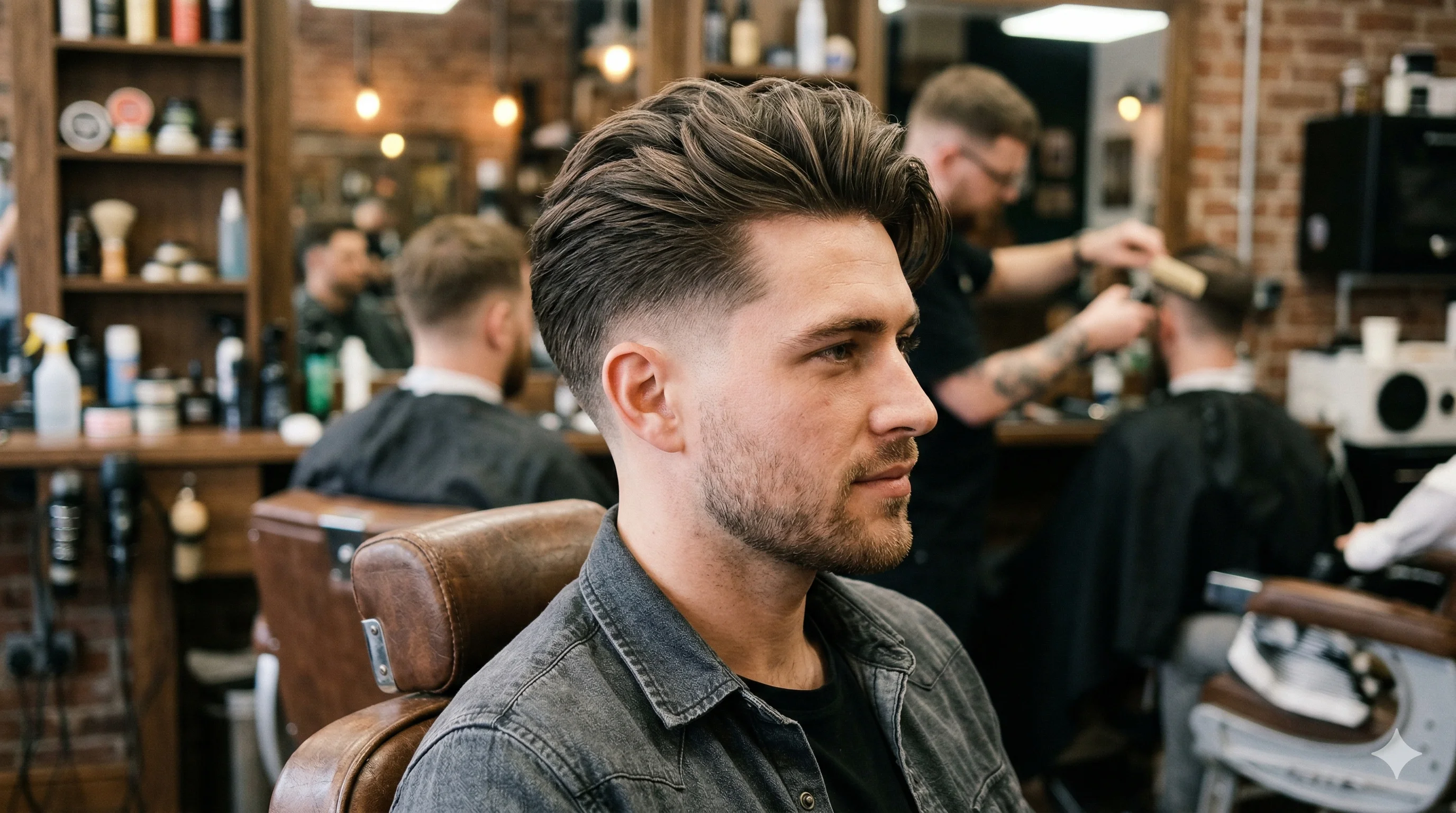
A textured flow fade combines graduated sides with longer, textured hair on top that can move backward or to the side.
What Is a Textured Flow Fade?
A textured flow fade is a sophisticated hybrid haircut that pairs clean, graduated sides with medium-length, naturally flowing hair on top. The sides feature a classic fade—whether low, mid, or high—while the top maintains enough length (typically 3-5 inches) to create movement and texture that flows naturally backward from the face.
Key Characteristics
- Faded sides: Clean transition from skin to longer hair
- Textured top: 3-5 inches of layered, textured hair
- Natural flow: Hair moves naturally backward and to the side
- Soft finish: Matte or low-shine styling products
- Versatile styling: Can be worn casual or dressed up
What the Textured Flow Fade Offers
The contrast comes from close-cut sides and a longer top. A soft finish leaves more movement than a rigid, slicked-back style.
The Appeal
The longer top allows backward or sideward movement, with matte or low-shine products for a softer finish.
Types of Textured Flow Fades
Low Textured Flow Fade
The low fade starts just above the ear, offering a subtle transition that's perfect for conservative environments. This version keeps more hair on the sides, creating a softer overall look.
Best for:
- Professional workplace settings
- Round or square face shapes
- Those new to fade haircuts
Mid Textured Flow Fade
A mid fade places the transition between the low and high options. Its effect depends on the top length and how much hair is left on the sides.
Best for:
- All face shapes
- Versatile lifestyle needs
- First-time flow fade wearers
High Textured Flow Fade
The high fade creates maximum contrast, with the fade starting near the temples. This bold version makes a strong style statement while keeping maintenance relatively simple.
Best for:
- Oval and oblong face shapes
- Those wanting a dramatic look
- Men comfortable with frequent barber visits
Textured Flow Fade Variations
| Variation | Top Length | Fade Height | Maintenance Level |
|---|---|---|---|
| Classic Flow Fade | 3-4 inches | Mid | Medium |
| Long Flow Fade | 5-6 inches | Low | High |
| Short Textured Flow | 2-3 inches | High | Low |
| Wavy Flow Fade | 4-5 inches | Mid | Medium |
| Curly Flow Fade | 3-4 inches | Low | Medium |
How to Ask Your Barber for a Textured Flow Fade
Getting the perfect textured flow fade requires clear communication with your barber. Here's exactly what to say:
Step 1: Describe the Fade
Start with the foundation: "I want a [low/mid/high] skin fade on the sides and back."
Step 2: Explain the Top
Be specific about the length and texture: "Leave 4 inches on top with plenty of texture and layers. I want it to flow naturally backward."
Step 3: Discuss the Finish
Clarify your styling preferences: "I want a soft, natural look—not slicked back or stiff. Think textured and touchable."
Step 4: Mention Key Details
Don't forget these important specifics:
- "Please blend the fade seamlessly into the top"
- "Add texture with point cutting or texturizing shears"
- "Keep the back tapered and natural"
Pro Tip: Bring Reference Photos
Show your barber 2-3 photos of textured flow fades you like. This eliminates confusion and ensures you and your barber share the same vision.
How to Style a Textured Flow Fade
Styling a textured flow fade is straightforward once you understand the technique. Here's your daily routine:
Step-by-Step Styling Guide
- Start with damp hair: Towel dry your hair until it's about 80% dry
- Apply product: Work a small amount of styling cream or clay through your hair
- Direct the flow: Use your fingers or a wide-tooth comb to push hair backward
- Blow dry (optional): Use a blow dryer on low heat to set the direction
- Final touches: Add a touch more product to define texture if needed
Recommended Styling Products
| Product Type | Best For | Hold Level | Finish |
|---|---|---|---|
| Styling Cream | Daily use, all hair types | Light-Medium | Natural |
| Matte Clay | Thick hair, maximum texture | Medium-Strong | Matte |
| Sea Salt Spray | Adding volume and texture | Light | Natural |
| Light Pomade | Wavy hair, soft hold | Light-Medium | Low shine |
| Texturizing Paste | Fine hair, added body | Medium | Matte |
Products to Avoid
- Heavy gels that create stiff, crunchy texture
- High-shine products that look greasy
- Waxes that weigh down the hair
- Anything that reduces natural movement
Maintenance and Upkeep
Keeping your textured flow fade looking sharp requires regular maintenance:
Barber Visit Schedule
- Fade touch-up: Every 2-3 weeks
- Full cut with texturizing: Every 4-6 weeks
The fade grows out faster than the top, so you may need more frequent visits to maintain the clean sides while letting the top grow naturally.
Daily Care Tips
- Wash wisely: Use shampoo without sulfates 2-3 times per week
- Condition regularly: Keep hair soft and manageable
- Avoid over-washing: This strips natural oils that add texture
- Protect from heat: Use heat protectant if blow drying daily
- Sleep smart: A silk or satin pillowcase reduces friction
Between Haircuts
As your hair grows, you can maintain the style by:
- Using slightly more product for control
- Directing hair more deliberately during styling
- Asking your barber for a quick fade cleanup if needed
Face Shapes for the Textured Flow Fade
While the textured flow fade works for most face shapes, here's how to optimize it for yours:
- Oval: Any variation works beautifully
- Round: Go for a high fade and more volume on top to elongate
- Square: Mid fade softens angular features; add texture on top
- Oblong: Low fade with more volume on the sides creates balance
- Heart: Mid fade with forward-flowing texture on top
- Diamond: Low to mid fade, emphasize width with side flow
Textured Flow Fade for Different Hair Types
Straight Hair
Straight hair creates the classic flow fade look. Use texturizing products to add movement and prevent the style from looking flat.
Wavy Hair
Wavy hair is ideal for this style, as natural waves enhance the flowing movement. Use styling cream to define waves without weighing them down.
Curly Hair
Curly hair creates a unique textured flow fade with natural volume and movement. Work with your curl pattern rather than against it, using curl-defining products.
Thick Hair
Thick hair holds the style well but may need thinning or texturizing to prevent bulk. Ask your barber to remove weight while maintaining texture.
Fine/Thin Hair
Fine hair benefits from sea salt spray and volumizing products. A higher fade can create the illusion of thicker hair on top.
Common Mistakes to Avoid
- Using too much product: Start with a small amount; you can always add more
- Fighting your natural texture: Work with your hair, not against it
- Waiting too long between cuts: The fade loses definition after 3 weeks
- Over-styling: The goal is natural movement, not perfection
- Wrong product choice: Match products to your hair type
- Skipping the reference photos: Clear communication prevents disappointment
Frequently Asked Questions
How long does hair need to be for a textured flow fade?
You need at least 3 inches on top to achieve the flowing effect. Most textured flow fades work best with 4-5 inches on top.
Is the textured flow fade hard to maintain?
The biggest commitment is regular barber visits for the fade.
Can I get a textured flow fade with thinning hair?
Yes, but work with your barber to determine the best approach. A lower fade and strategic texturizing can create the illusion of fuller hair.
How much does a textured flow fade cost?
Ask the barbershop for a quote and confirm which services it includes before booking.
How do I grow out a textured flow fade?
This style grows out gracefully. Simply let the sides grow while maintaining the textured top. You can transition to a longer flow style over time.
What's the difference between a flow fade and a regular fade?
A regular fade can be paired with any top style. A flow fade specifically refers to longer, flowing hair on top styled to move naturally backward.
Try Before You Cut with BaldFade AI
The Crop With Long Fringe and Natural Texture preview shows a forward-textured crop. It is a related outline, not a swept-back flow preview or a control for exact fade height and length.
Conclusion
A textured flow fade combines a defined outline with movement on top. Choose the fade height and top length around your hair texture and styling routine.
Compare the forward fringe in the Crop With Long Fringe and Natural Texture preview with the swept-back movement described here, using it as a related crop reference rather than an exact flow preview.